New Delhi, August 27 2025
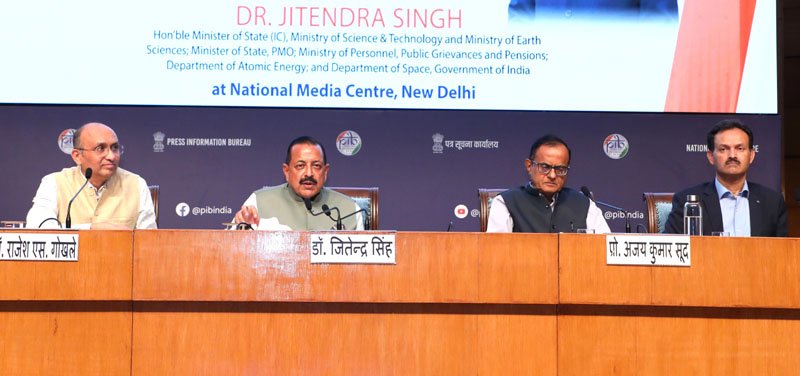
India’s biotechnology sector marked a symbolic milestone this week: the first anniversary of the BioE3 Policy (Biotechnology for Economy, Environment, and Employment). At a high-profile event, Union Science and Technology Minister Dr. Jitendra Singh unveiled a suite of ambitious initiatives, including the BioE3 Challenge for Youth and the nation’s first National Biofoundry Network.
The announcements captured the sector’s soaring ambition—projecting biotechnology as a pillar of India’s future economy and sustainability goals. But alongside the celebrations, another story emerged, highlighting the sector’s challenges in execution: delayed disbursal of grants under the DBT’s Biocare programme for women scientists, leaving 75 researchers stranded despite being officially selected months ago.
Together, the two developments present a telling snapshot of India’s bioeconomy—brimming with promise but struggling to match vision with delivery.
The BioE3 Vision: From Policy to Action
Launched in 2024, the BioE3 Policy set out to make biotechnology a driver of economic growth, environmental sustainability, and employment generation. One year on, Dr. Jitendra Singh painted a picture of remarkable progress:
- India’s bioeconomy has grown from $10 billion in 2014 to $165.7 billion in 2024, and the government has set a target of $300 billion by 2030.
- The inauguration of India’s first Biomanufacturing Institute at Mohali, envisioned as a hub for scaling biotech innovations into industrial applications.
- The establishment of Bio-Artificial Intelligence hubs, biofoundries, and biomanufacturing hubs across the country.
- Launch of more than a dozen joint research calls covering cell and gene therapy, carbon capture, climate-smart agriculture, and functional foods—all emerging areas where biotechnology intersects with climate and health challenges.
- More than 2,000 research proposals received in the first year, demonstrating growing interest and capacity among Indian scientists and institutions.
Perhaps the most headline-worthy was the announcement of the National Biofoundry Network, linking six institutions to serve as testing grounds and scaling centers for biotech innovations. These facilities will help startups and researchers move from lab-scale proofs of concept to market-ready products, reducing dependence on overseas infrastructure.
In addition, Dr. Singh announced an MoU between the Department of Biotechnology (DBT) and ISRO, forging a novel partnership between space and life sciences. Earlier this year, three DBT-backed experiments were already carried out aboard the International Space Station by Group Captain Subhanshu Shukla, part of India’s Gaganyan programme—an early indication of the synergies between space exploration and biotechnology.
BioE3 Challenge for Youth: Nurturing Next-Gen Innovators
The centrepiece of the anniversary event was the launch of the BioE3 Challenge for Youth, aimed at encouraging innovation across multiple levels—schoolchildren, university students, researchers, startups, and faculty.
The format is designed to be both competitive and nurturing:
- Each month from October 2025, a new challenge will be announced under the theme “Design Microbes, Molecules & More.”
- The top 10 winners each month will receive cash awards of ₹1 lakh.
- A larger pool of 100 selected innovators will qualify for funding of up to ₹25 lakh, disbursed through the Biotechnology Industry Research Assistance Council (BIRAC).
- Projects will gain access to incubation facilities and mentoring at BRIC+ institutions nationwide.
The initiative aims to align India’s youth with national priorities: healthcare innovation, climate-smart solutions, industrial biomanufacturing, and sustainable agriculture.
Dr. Singh called it an invitation to young Indians to “turn imagination into impact,” while DBT Secretary Dr. Rajesh Gokhale emphasized that the challenge would be judged not just on novelty but also on safety and sustainability—reflecting global concerns around ethical biotechnology.
Expert Views: Biotechnology as a Strategic Lever
Prof. Ajay Kumar Sood, Principal Scientific Adviser to the Government of India, framed the BioE3 Policy as part of India’s larger Atmanirbhar Bharat strategy, positioning biotechnology as a lever for national resilience. “By leveraging biotechnology,” he noted, “India can advance public health, safeguard the environment, and address climate change while building economic competitiveness.”
This aligns with global trends. According to OECD, the global bioeconomy could exceed $8 trillion by 2030, with applications spanning renewable energy, biomaterials, food security, and pharmaceuticals. India, with its scientific talent and cost advantages, is aiming to secure a major share of this growth.
The Other Story: Biocare Delays for Women Scientists
While BioE3’s vision dominated headlines, another development cast a shadow on the celebrations. Under the Biocare programme—a DBT initiative launched in 2011 to support unemployed women scientists—75 researchers were selected in March 2025. Each was to receive a grant of up to ₹60 lakh over three years, including a salary component of ₹75,000 per month.
Yet, five months later, none of the awardees have received sanction letters or funds.
“For the past five months, we have been writing to the DBT,” said one selected scientist. “We were told the funds would be released within a month. Now no one is responding to our calls.”
The conditions of the programme bar participants from seeking alternative funding, which means many women had to decline international fellowships or other projects to commit to Biocare—only to find themselves stranded without support.
The Treasury Single Account Bottleneck
Officials attribute the delay to the introduction of the Treasury Single Account (TSA) system, rolled out in November 2024. Unlike earlier processes where departments like DBT directly disbursed funds, TSA centralizes the flow of funds through the Reserve Bank of India.
While intended to improve transparency and curb leakages, the system has slowed disbursals. Earlier this year, DBT’s flagship INSPIRE fellowship programme faced similar delays, with hundreds of research scholars waiting months for stipends.
DBT Secretary Rajesh Gokhale told The Hindu that funds would be released “in the next 10 days.” But for many researchers, the delays have already caused disruptions in careers, projects, and personal finances.
Ambition vs. Execution: The Policy Gap
The juxtaposition is striking: on one hand, India celebrates biotechnology’s leap from $10 billion to $165.7 billion in a decade, and on the other, 75 women scientists cannot begin their projects due to procedural bottlenecks.
This gap between vision and execution raises important questions:
- Can India’s ambitious BioE3 roadmap succeed if administrative inefficiencies persist?
- How will delays affect the very talent pipelines that BioE3 seeks to nurture?
- Is the pace of institutional reform keeping up with the speed of scientific innovation?
Conclusion: A Tale of Two Realities
The first year of BioE3 underscores India’s determination to harness biotechnology for national progress. Initiatives like the BioE3 Challenge for Youth and the National Biofoundry Network signal a future of innovation, employment, and sustainability.
But the struggles of women scientists under Biocare remind us that policies are only as strong as their execution. For India’s bioeconomy to reach the ambitious $300 billion target by 2030, visionary announcements must be matched by timely delivery at the ground level.
The story of BioE3 at one year is thus not just about science—it is about governance, accountability, and the human cost of delay.

📩 For more in-depth stories connecting science, policy, and people, follow True Roots Media or write to us at info@truerootsmedia.com.