
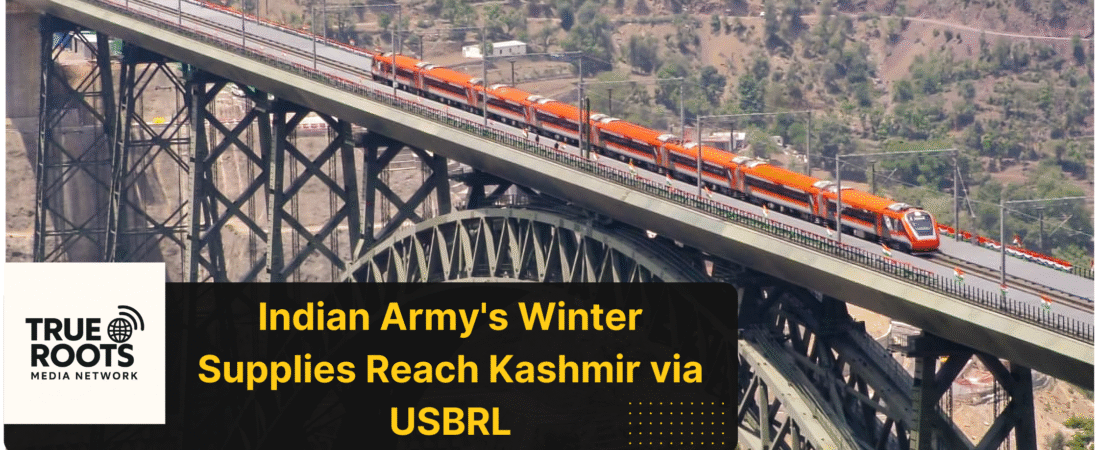
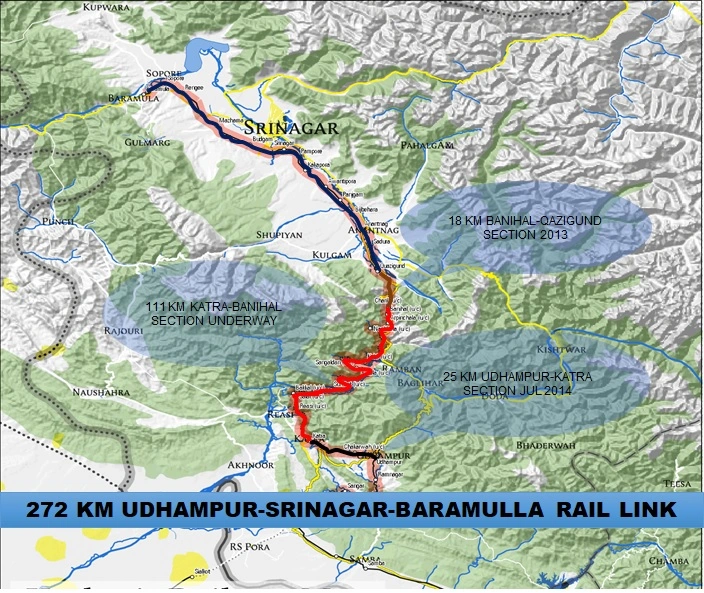
In a landmark achievement for Jammu and Kashmir’s connectivity, the Indian Army flagged off the first exclusive freight train on the Udhampur-Srinagar-Baramulla Rail Link (USBRL) today, September 15, 2025, delivering 753 metric tons (MT) of advance winter stocking essentials to forward areas in Anantnag district. Departing from BD Bari in Jammu’s Samba district, the train traversed the 272-km electrified route, marking the inaugural commercial freight operation on this strategic line completed in February 2024 at a cost of ₹41,000 crore. On its return journey, the rake will transport Kashmiri apples to Delhi, supporting the Valley’s horticulture sector that contributes ₹15,000 crore annually to the economy and employs over 3.5 million people.
This development follows the partial reopening of NH-44 on September 10 after a nine-day blockade due to landslides, which stranded 4,000 vehicles and caused ₹200-700 crore losses to the fruit industry from rotting produce. The USBRL, featuring 38 tunnels (including the 12.7-km Pir Panjal) and 927 bridges, reduces travel time from 12 hours by road to 3.5 hours by rail, enhancing all-weather access vital for a region prone to 150% excess monsoon rains this year. Army officials hailed the move as a “game-changer” for logistics, with the train carrying essentials like rations and medical supplies for 50,000 troops in high-altitude posts.
Lieutenant Governor Manoj Sinha inaugurated the service, emphasizing its dual role in defense and civilian growth. The parcel train, inaugurated earlier today in Srinagar, will handle 23 tons daily, addressing frequent highway disruptions that affected 12,000 km of roads in recent floods, claiming 40 lives. Fruit growers from Sopore and Shopian, where 70% of Kashmir’s apples originate, anticipate a 20% export boost, mitigating delays that spoiled 1,000 truckloads last month. This rail initiative aligns with the National Rail Plan 2030, aiming for 100% electrification, and underscores J&K’s integration into India’s freight network, potentially increasing cargo volume by 30% annually.