
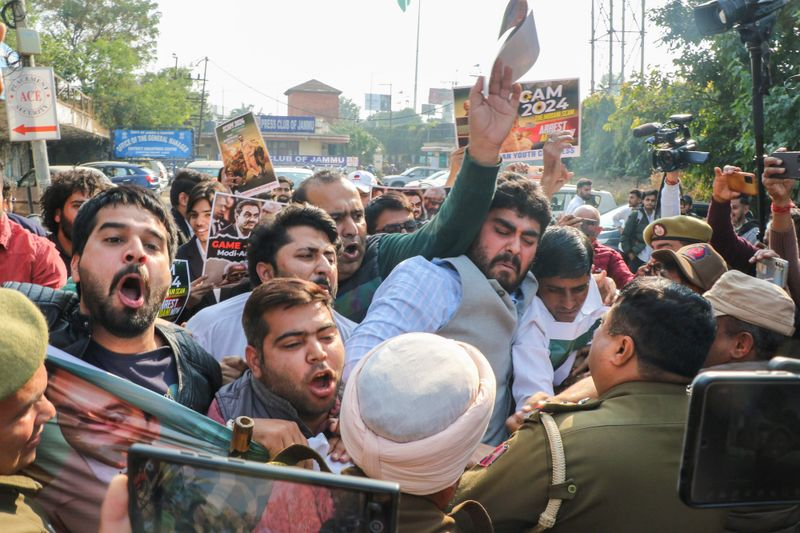
Jammu’s urban heart, Gandhi Nagar, ground to a halt today, September 24, 2025, as hundreds of unemployed youth staged a massive protest, blocking key roads to demand government action on the region’s spiraling job crisis. The rally, organized by the Jammu Youth Unemployment Forum (JYUF), a grassroots group of graduates and diploma holders, began at 10 AM near the Mini Market, with protesters chanting for job creation and transparency in recruitment. Frustration over stagnant hiring, delayed exams, and a post-flood economic slump fueled the demonstration, which disrupted traffic for hours and drew a heavy police presence. The youth, many from rural areas like Reasi and Doda, say they’re fed up with empty promises and are pushing for immediate openings in government and private sectors.
The protest highlights a grim reality: Jammu’s unemployment rate, hovering around 8% as per recent Labour Bureau data, is among the highest in northern India, hitting young people hardest. Graduates from Jammu University and ITI diploma holders from rural polytechnics joined hands, holding signs reading “No Jobs, No Future” and “Where’s Our Share?” The floods last month worsened things, wiping out small businesses in Kathua and Udhampur, where many relied on casual work. Protesters pointed to the slow pace of JKSSB recruitments, with only a few hundred jobs filled yearly against thousands of applicants. “We studied hard, but there’s nothing for us,” said Anil Sharma, a 26-year-old engineering graduate from Doda, who’s been jobless for two years.
The rally turned tense when police tried to clear the roads around noon, leading to minor scuffles but no arrests. Traffic jams stretched from Gandhi Nagar to Trikuta Nagar, leaving commuters stranded and shops shuttered. The JYUF submitted a memorandum to the Deputy Commissioner, demanding a special job drive, faster JKSSB exams, and incentives for private firms to hire locally. They also called for reviving stalled projects like the Tawi Riverfront, which could create construction jobs. Chief Minister Omar Abdullah responded via tweet, promising a job fair by October and talks with industry leaders, but protesters want concrete timelines, not “more meetings.”
Rural youth, who traveled hours to join, shared stories of struggle. In villages like Reasi, where farming is no longer enough, young people pin hopes on government posts, but delays in exams like JKSSB’s constable tests (set for tomorrow) add to their woes. Women protesters, making up nearly 30% of the crowd, demanded more inclusive hiring, noting that female unemployment in Jammu is nearly double that of men. The floods didn’t just take homes; they crushed small enterprises like tailoring shops in Akhnoor, leaving families jobless. “We’re not asking for charity – just a chance to work,” said Priya Devi, a commerce graduate from Kathua.
The government’s response has been a sore point. While schemes like PMGSY and MGNREGA exist, rural uptake is low due to bureaucratic red tape and lack of awareness. The protesters slammed the Jammu Development Authority for slow progress on job-creating projects, with only 20% of planned industrial units in Samba operational. Urban areas aren’t much better – Gandhi Nagar’s IT hubs promised thousands of jobs, but most go to outsiders. The upcoming LAHDC elections in Ladakh, where similar protests erupted, have inspired Jammu’s youth to push harder, with #JammuJobs trending alongside solidarity posts for #StatehoodForLadakh.
This isn’t the first protest – similar rallies hit Jammu in 2024, but today’s scale, with over 500 marchers, signals growing unrest. The police kept things under control, but the message was clear: youth want jobs, not promises. The government’s job fair plan is a start, but protesters demand a clear roadmap – 10,000 new posts by 2026, transparent hiring, and skill training tied to local needs. With Navratri celebrations ongoing, the contrast is stark: festive joy meets economic despair. The rally dispersed by evening, but the JYUF vows to return if demands aren’t met.
Jammu’s youth are its backbone, but unemployment is sapping their hope. The government must act fast – speed up exams, fund local startups, and fix recruitment delays. For now, the streets are quiet, but the anger lingers. If you’re feeling the job pinch, share your story – Jammu’s fight is just starting, and every voice counts.