
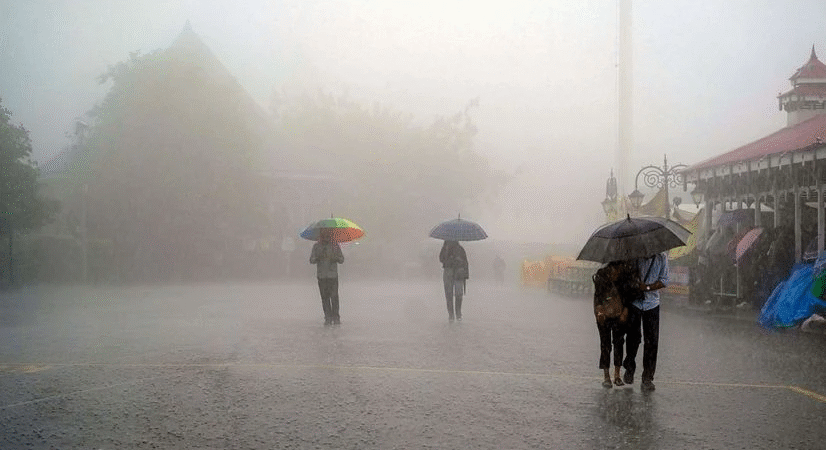
Samba, October 6, 2025 – The Ravi’s banks in Ramgarh sector usually hum with the golden promise of harvest by now, but this morning, as sheets of rain lashed the border belt around 6:30 AM, what greeted farmers was a heartbreaking sight: acres of paddy stalks flattened like fallen soldiers, their grain-heavy heads kissing the mud. In tehsils like Ramgarh, Samba town, and Rajpura – where the International Border fences off dreams from dangers – strong winds whipping through the night have turned lush fields into sodden battlegrounds. “Nearly ripe, ready for the sickle, and poof – gone in a gust,” lamented Karan Singh, 55, a third-generation grower from Karalian village, knee-deep in his ruined plot by 9 AM, his kurta plastered to his skin. With IMD’s heavy rain warning blanketing the division till tomorrow, Samba’s agrarian heart is reeling, and calls for swift damage assessments are ringing louder than the thunder.
It’s the second punch in a month for these resilient border folk, who barely shook off August’s floods that drowned orchards and snapped supply lines. Yesterday’s storm, packing gusts up to 40 kmph, hit hardest post-sunset, twisting crops that were days from reaping. In Rajpura, over 200 hectares lie prostrate; Ramgarh reports similar devastation, with irrigation channels overflowing into fields, washing away topsoil. “Our paddy’s the family’s lifeline – school fees, wedding savings, all in those ears,” said sarpanch Meera Devi, 52, coordinating with revenue teams near the zero line around 11 AM, her phone buzzing with desperate texts from 50-odd growers. The economic sting? Acute – Samba supplies 25% of Jammu’s rice, and flattened fields mean not just lost yields but spiked prices at Raghunath Bazaar. Early tallies peg losses at lakhs per farmer, with hail pockets in Suchetgarh adding insult.
But in true border spirit, the response is rallying. By noon, tehsildars from Samba and Vijaypur were out with measuring tapes and notepads, urged by District Collector Rachna Vyass in a video call from Jammu HQ. “Door-to-door surveys start today; compensation under PM Crop Insurance – no delays,” she assured, echoing Chief Minister Omar Abdullah’s midday tweet: “Samba’s toilers deserve better; teams on ground, funds flowing.” BSF jawans from the 192 Battalion, who’ve shared meals with these very farmers, pitched in too – patrolling fields to guard against pilferage amid the chaos. “These lands feed us all; we’ll stand watch,” said a young constable over shared rotis at a wayside dhaba.
For families like the Singhs, it’s personal. Karan’s wife, Sunita, 48, sifted through the muck this afternoon, salvaging what grains she could for the evening’s dal. “Winds howled like ghosts; by dawn, our sweat was for nothing,” she sighed, her hands caked in clay. Kids from the local government school, home early due to the rain holiday, helped bundle the wreckage, turning loss into a family huddle. Broader worries loom: with LoC tensions simmering and tourism in nearby Hiranagar dipping, agriculture’s the anchor. “Government schemes helped last flood, but quicker this time – or loans bury us,” Karan added, eyeing the Ravi’s rising swirl.

As dusk crept in around 5 PM, with showers easing to a drizzle, Samba’s fields lay quiet under the fading light – a poignant pause before tomorrow’s potential torrent. Yet, amid the bent stalks, there’s that unyielding Dogra grit: neighbors sharing seeds for next sowing, panchayats pooling for aid. It’s a reminder that storms pass, but soil remembers. Hold fast, farmers; your call’s heard – assessments wrap by week’s end, relief by Navratri. In these border greens, resilience isn’t grown; it’s harvested.