
Jammu, September 5
Every year on September 5, India celebrates Teachers’ Day to mark the birth anniversary of Dr. Sarvepalli Radhakrishnan, the philosopher-President who once said that teachers should be the best minds in the country. When his students wanted to celebrate his birthday, he instead suggested that the day be observed as a national festival of gratitude to teachers. Since then, it has become a cherished tradition for students across India to honour their mentors with flowers, cards, cultural events, and heartfelt gestures.
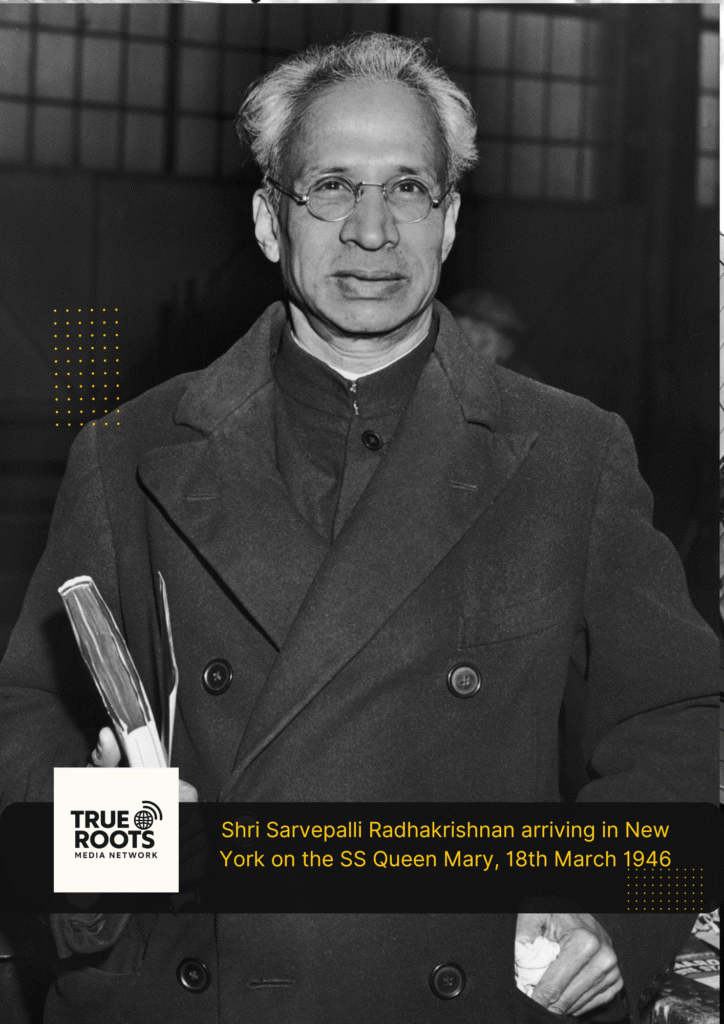
Sarvepalli Radhakrishnan was born on September 5, 1888, in Tiruttani, Tamil Nadu. His parents were Sarvepalli Veeraswami and Sitamma. He was married to Sivakamu and was the father of five daughters and one son.
In 1962, when students wanted to celebrate his birthday, he requested that the day be recognized as Teachers’ Day in honor of the teaching profession. This practice is still observed today.
Dr. Radhakrishnan received the Bharat Ratna in 1954 and was nominated for the Nobel Prize 27 times. His contributions to philosophy and religion continue to have a significant impact globally.
Upon becoming the President of India, he chose to accept only Rs 2500 of his Rs 10,000 salary, donating the remaining amount to the Prime Minister’s National Relief Fund each month.
A Jammu Connection: Remembering Local Educators
In Jammu, Teachers’ Day is not just about classrooms—it is about remembering a legacy of educators who shaped generations. Among them, two names stand out.
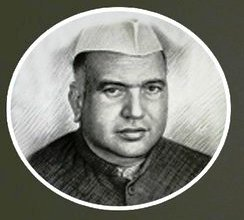
Prof. Girdhari Lal Dogra, remembered today as one of the most respected political leaders of Jammu and Kashmir, began his journey as a teacher. His early career was spent in classrooms, where he patiently explained lessons to young minds. Those who studied under him recall his humility and accessibility, qualities that would later define his political life.
When he moved into law and eventually politics, he never shed the qualities of a teacher—listening carefully, guiding patiently, and explaining with clarity. His reputation as the “People’s Man” was rooted not in slogans but in the values he carried from his teaching years. He embodied the idea that a teacher does not stop teaching once he leaves the classroom; the role of mentor and guide continues across every stage of life.
Another shining example is Prof. Sat Paul Sharma, a name that might not be as widely known outside Jammu but remains etched in the memory of thousands of students. Teaching for decades in government schools with limited infrastructure, he often had to make do without proper classrooms, blackboards, or resources. Yet, his passion never dimmed. Colleagues remember him carrying his own chalks, maps, and sometimes even benches to make sure students could learn comfortably. Parents in villages often remarked that their children spoke of him with a respect usually reserved for family elders. For Prof. Sharma, teaching was never just a profession—it was seva, service to the community. His story reflects the unsung heroes of India’s education system, who despite hardships, shaped the character and confidence of entire generations.
Guru Purnima and Teachers’ Day – Cultural Parallels
When we think about Teachers’ Day, it is easy to imagine decorated classrooms and formal speeches. But its deeper meaning comes alive when we compare it with Guru Purnima, the ancient festival dedicated to gurus. Observed on the full moon of Ashadha, Guru Purnima was a day when students paid respect to their spiritual and academic teachers. Unlike today’s celebrations, which last a few hours, Guru Purnima was a day of reflection and renewal. Disciples would gather around their gurus, not just to offer thanks but to recommit themselves to the path of learning. It emphasized the guru–shishya parampara, where knowledge was considered sacred, and respect for the teacher was boundless.
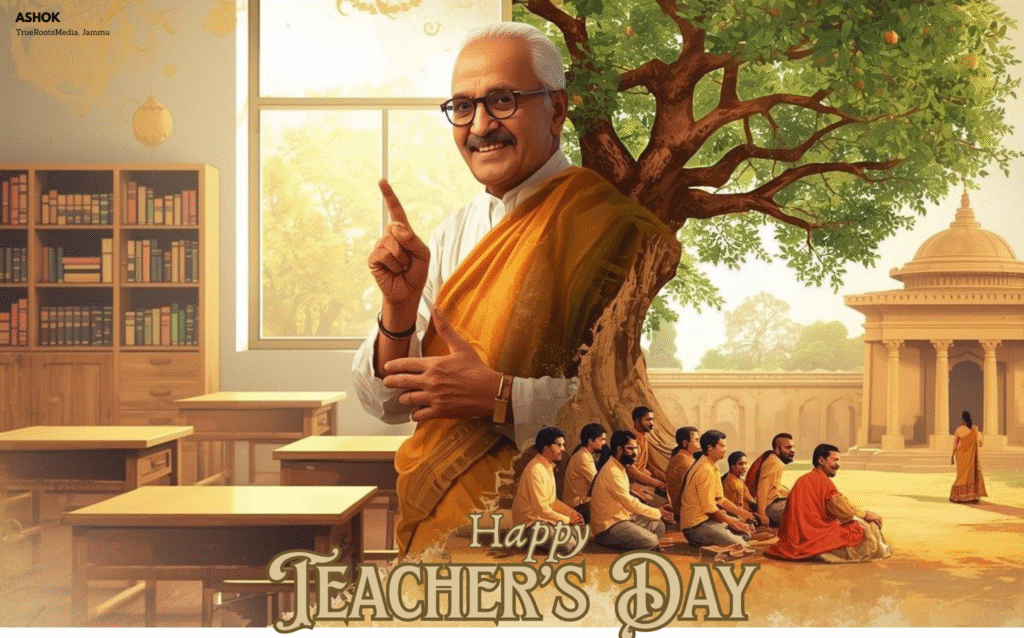
In a way, Teachers’ Day is the modern continuation of that tradition. Where Guru Purnima emphasized spiritual and moral wisdom, Teachers’ Day extends it to modern classrooms, highlighting the essential role of educators in building not just individuals, but a nation. The connection is clear: India has always revered those who pass on knowledge, whether they are gurus in ancient pathshalas or professors in today’s universities.
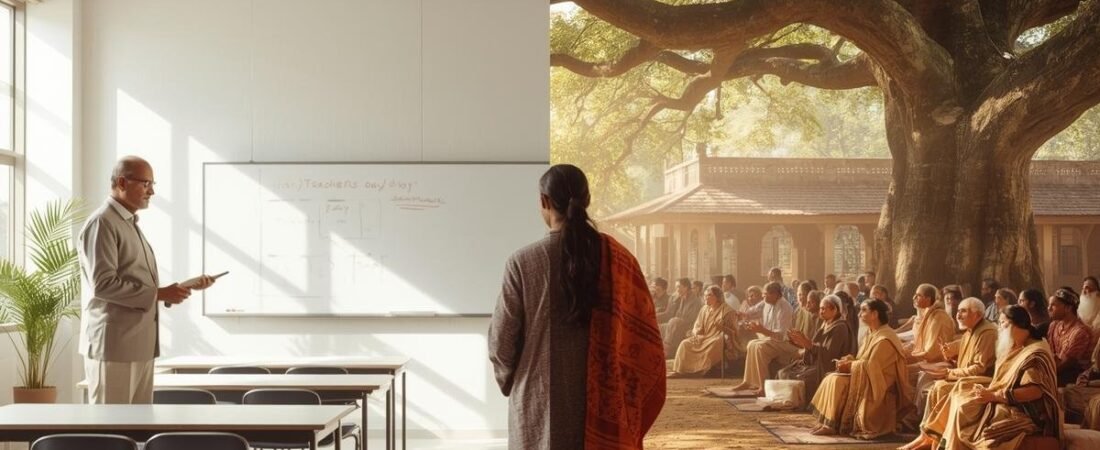
The journey from pathshalas to modern schools also tells us how teaching has changed, and how much has stayed the same. Pathshalas were simple spaces, often under a tree or in temple courtyards, where the guru imparted lessons orally. Students memorized verses, learned arithmetic by drawing in the dust, and imbibed moral values alongside practical skills. The atmosphere was intimate—discipline was strict, but so was the personal bond. Modern schools, by contrast, are structured, equipped with blackboards, projectors, and digital tools. They offer broader curricula, exposing students to global ideas and cutting-edge sciences. Yet, the essence of teaching—mentorship, guidance, and moral responsibility—remains unchanged. Teachers, whether in a pathshala or a smart classroom, remain anchors in a child’s journey of growth.
Jammu’s teachers have shown this spirit time and again, especially in moments of crisis. The recent floods, which displaced families and disrupted schools, became a reminder of their resilience. Several teachers organized classes in relief camps, while others guided students online, ensuring no child was left behind. Much like the gurus of ancient times who would teach under trees when there were no buildings, today’s educators adapt to whatever challenges come their way. Their spirit shows that teaching is not about resources but about commitment.
As India marches into a knowledge-driven future, teachers remain at the heart of transformation. The National Education Policy 2020 envisions them as facilitators of curiosity and creativity, not just providers of information. In Jammu, where culture and tradition run deep, this balance of modern learning with timeless values is especially important.
Whether we look back to the reverence of Guru Purnima, or forward to the promise of Teachers’ Day, one truth holds steady—teachers are the eternal gurus. Behind every leader, scientist, artist, or soldier, there is a teacher who once nurtured the spark of potential. On this Teachers’ Day, let us not only thank the teachers we know, but also remember the legacy of figures like Prof. Dogra and Prof. Sharma, who carried the torch of knowledge in Jammu. They remind us that teaching is more than a career—it is a lifelong act of service, a bridge between generations, and the foundation of a nation’s progress.
📩 Do you know an inspiring teacher from Jammu whose story should be told?
Write to us at info@truerootsmedia.com and we’ll feature them in our upcoming stories.