
In the early years following India’s independence, the Jammu region of the erstwhile state of Jammu & Kashmir witnessed an intense political and cultural resistance—one centered not around weapons or warfare, but around the Indian national flag itself.
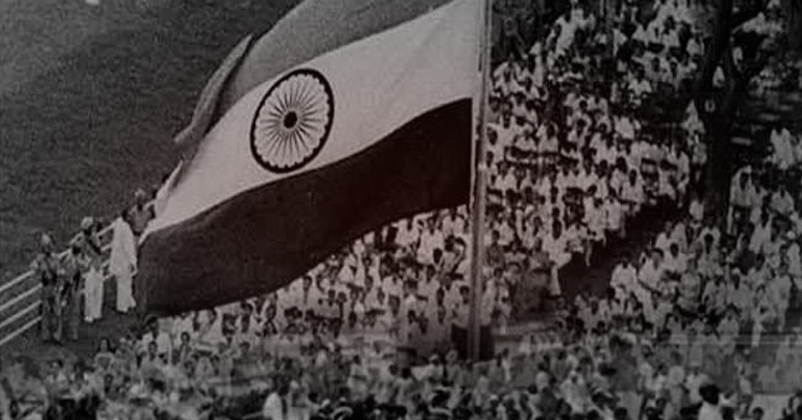
A Flag That Symbolized Unity—and Resistance
In 1952, the Praja Parishad movement reached a boiling point. With demands for full integration of Jammu & Kashmir with the Union of India, the protestors rallied under the slogan:
“Ek desh mein do vidhan, do pradhan, do nishan—nahi chalenge, nahi chalenge.”
(“Two constitutions, two prime ministers, and two flags in one nation—will not be accepted.”)
Prem Nath Dogra, a towering figure in the movement, led demonstrations where protestors attempted to hoist the Indian tricolor in government institutions, challenging the state’s separate status. In several such attempts, the response was brutal—police lathicharge, arrests, and even shootings.
Read our first story on the legacy of Praja Parishad to understand the foundation of this resistance.
Sunderbani: The Forgotten Martyrs
On 30 January 1953, in Sunderbani (Poonch district), protestors marched to hoist the Indian flag. The administration responded with open fire—three protestors lost their lives. Their names may be lost to history, but their sacrifice is remembered each year by locals who continue to observe the day in solemn tribute.
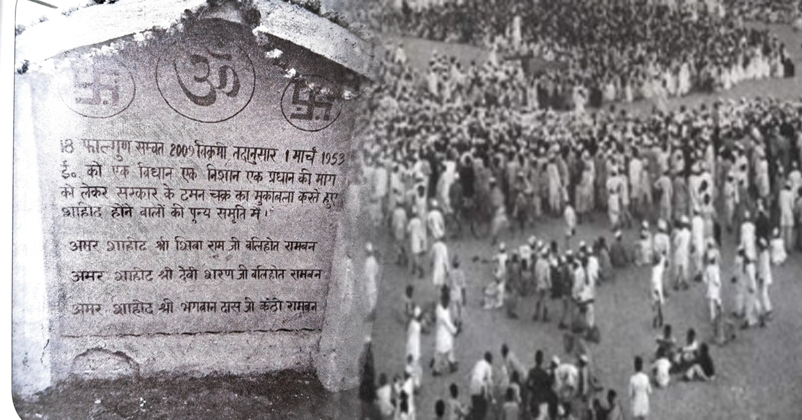
Learn more about Sunderbani, the town that stood as a symbol of resistance.
Why the Flag Still Matters in J&K
Fast forward to 5 August 2019, the Government of India abrogated Article 370 and removed Article 35A. The Indian national flag now flies alone over the Union Territory of Jammu & Kashmir, just like every other state in the country.
This move, though politically debated, was emotionally significant for those who had long fought for complete integration. For Ashok, founder of True Roots Media, born and raised in Jammu, the moment represented the fulfillment of a long-standing struggle.
Ashok’s own family recalls the days when simply displaying the Indian flag in certain parts of J&K could invite persecution. Today, through his platform, he aims to bring forth such stories that many have forgotten—or never learned.
Conclusion: A Piece of Cloth, A Nation’s Identity
The Indian tricolor is more than a piece of cloth. For the people of Jammu who protested under its shadow, it was a declaration of unity, identity, and belonging. As we document these stories through True Roots Media, we hope the new generation understands the historical journey that brought Jammu & Kashmir where it stands today.
📚 Want to explore more?
📝 For more untold stories, perspectives, and editorials, visit:
www.truerootsmedia.com
📩 Email us: info@truerootsmedia.com