
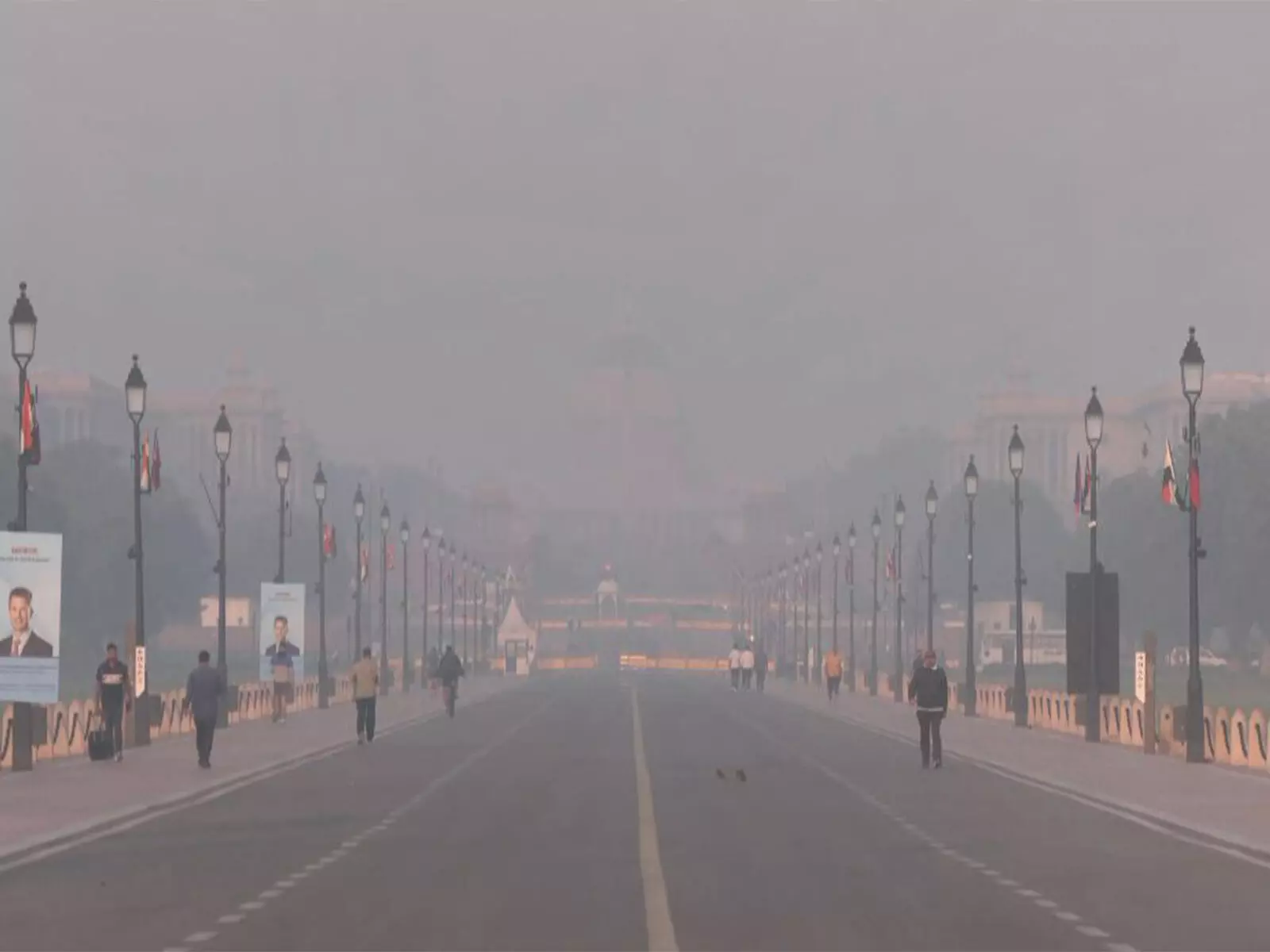
NEW DELHI, October 31, 2026 – Gearing up for the annual severe winter pollution crisis, the Commission for Air Quality Management (CAQM) has issued sweeping preemptive directives for Delhi and the National Capital Region (NCR), including a mandatory 50 percent work-from-home rule for offices and a halt on most outdoor construction activities from November 5 to 20.
In a formal order issued under Section 12 of the CAQM Act 2021, the Commission directed both government and private offices within the NCT of Delhi and five surrounding districts—Gurugram, Faridabad, Sonipat, Ghaziabad, and Gautam Buddha Nagar—to operate with a maximum of 50 percent physical staff attendance. Essential services and industrial establishments where remote work is not feasible are exempted from this mandate.
The Commission has also imposed strict restrictions on dust-generating demolition and outdoor construction activities across the entire NCR. This sweeping ban will notably cover linear public infrastructure projects, halting work on highways, roads, flyovers, overbridges, power transmission lines, pipelines, and telecommunication infrastructure.
However, carefully outlined exemptions have been made for critical sectors. Projects related to railways, metro services, airports, inter-state bus terminals, hospitals, water supply, sanitation, national security, defense-related activities, and other projects of significant national importance will be allowed to continue operations.
Explaining the rationale behind these stringent early interventions, the CAQM cited historical Air Quality Index (AQI) data tracked between 2018 and 2025. The data reveals a consistent and dangerous pattern of elevated pollution levels in the Delhi-NCR region during early to mid-November, where the AQI frequently hits the ‘Severe’ and ‘Severe+’ categories.
The order noted that this peak period creates a perfect storm for hazardous air quality: local emission sources combine with seasonal agricultural residue (stubble burning) and biomass burning. These emissions are then trapped over the region due to adverse meteorological conditions, including extremely low wind speeds, a shallow atmospheric boundary layer, and reduced vertical mixing that prevents pollutant dispersion.
By implementing these measures preventively, the CAQM aims to proactively reduce emissions at their source and prevent the dangerous accumulation of pollutants before the region hits its historical peak pollution window.
Published by True Roots Media Network