
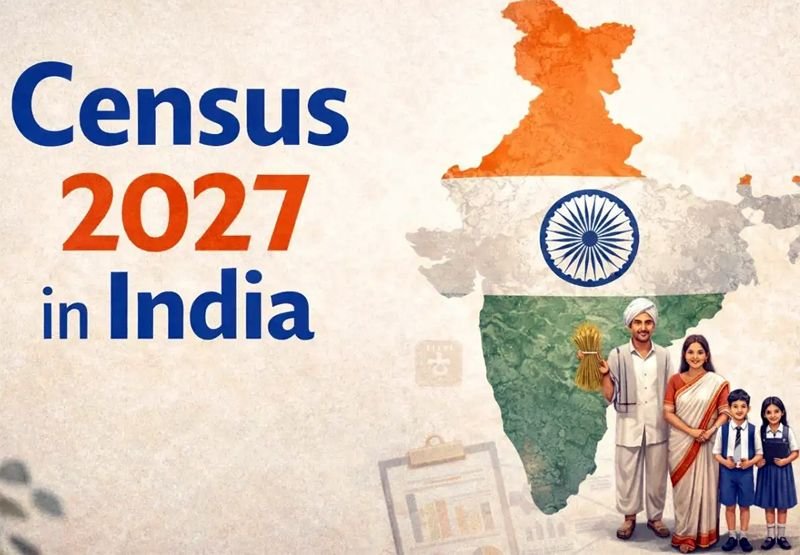
New Delhi – November 7: In a nationwide initiative to ensure accurate representation for over tens of millions of marginalized citizens, more than 500 disability rights advocates, grassroots organizations, caregivers, and community leaders joined a national consultative dialogue to bolster the enumeration of Persons with Disabilities (PwDs) in the upcoming Census 2027.
The high-level online forum, convened under the aegis of the ‘Missing Millions Campaign’, was jointly spearheaded by the National Centre for Promotion of Employment for Disabled People (NCPEDP) and Sense International India. The deliberations centered on dismantling socio-technical barriers in the national headcount, ensuring full accessibility, and conducting a live walkthrough of the upcoming Digital Self-Enumeration module scheduled for a pilot rollout between November 16 and 30 across Uttar Pradesh, Punjab, Goa, and parts of Uttarakhand.
Advocacy leaders emphasized that Census 2027 represents a watershed moment for disability rights. Under the landmark Rights of Persons with Disabilities (RPwD) Act, 2016, the number of statutorily recognized disability categories was expanded from 7 to 21. Reflecting this statutory mandate, a Gazette of India notification dated August 14, 2026, officially designated Question No. 13 of the Population Enumeration Questionnaire to capture disability data, grouping the 21 conditions into nine broad clusters with provisions allowing individuals to record up to three distinct disabilities.
“Every person with a disability must be counted, and counted with absolute precision. Individuals living with deafblindness and multiple complex disabilities have historically remained among the least visible and most routinely excluded from national registries. Without robust, scientifically gathered empirical data, targeted government welfare policies and specialized interventions cannot reach those who need them most,” underscored Uttam Kumar, Chief Executive Officer of Sense International India.
Echoing these sentiments, Arman Ali, Executive Director of NCPEDP, urged the disability community to actively leverage technology. “Digital Self-Enumeration is a transformative advancement that empowers citizens to serve as primary enumerators of their own households. We must mobilize across every tier of society to ensure that not a single individual with a disability is left uncounted,” Ali asserted.
During the interactive proceedings, participants raised crucial structural concerns regarding the enumeration of neurodivergent conditions, hidden learning disabilities, and temporary impairments. Clear demands were raised regarding protocols for households encountering biometric failures during Aadhaar authentication, the formal acceptance of Unique Disability ID (UDID) cards, accessible public awareness materials in regional languages, and compassionate follow-up procedures for missed or locked households.
The conference concluded with a joint declaration to aggressively expand grassroots outreach, train local enumerators, and engage proactively with the Registrar General and Census Commissioner of India to guarantee universal inclusion.
Published by True Roots Media