
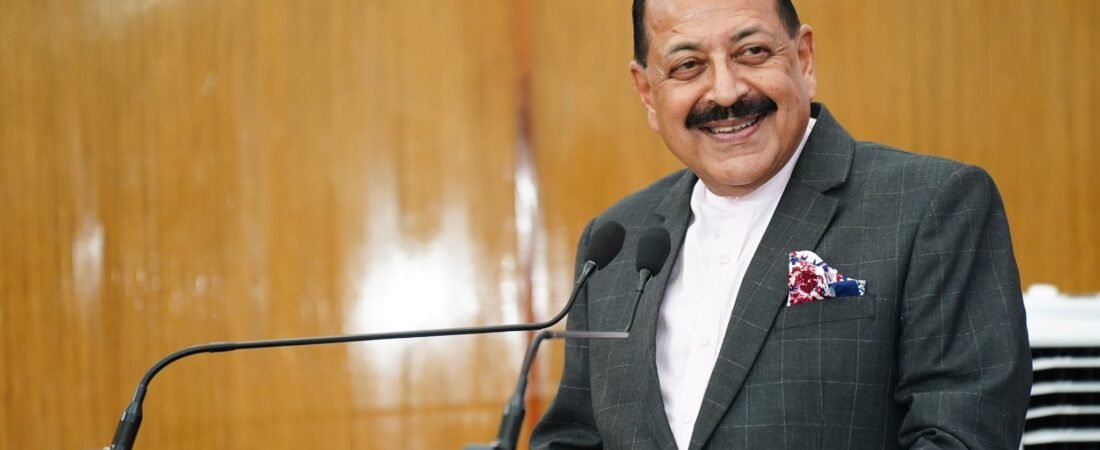
SHILLONG, July 14, 2026 — India is officially entering its next phase of governance transformation, driven by artificial intelligence and digital public infrastructure, Union Minister Dr. Jitendra Singh announced during the inauguration of a major two-day national conference in Shillong on Monday.
Addressing the “National Conference on Next Generation Administrative and e-Governance Reforms,” the Union Minister of State (Independent Charge) for Science & Technology and Minister of State in the Prime Minister’s Office stated that after a decade of removing obsolete laws, the government’s focus is now firmly on the future.
The event, jointly organized by the Department of Administrative Reforms and Public Grievances (DARPG) and the Government of Meghalaya, was attended by Meghalaya Chief Minister Conrad K. Sangma, top bureaucrats, and district collectors from across the country.
The ‘Reform Express’ and Tech-Driven Administration
Referencing Prime Minister Narendra Modi’s call for a “Reform Express” during his third term, Dr. Singh emphasized that future administrative reforms must integrate Artificial Intelligence (AI), robust cybersecurity, and citizen-centric service platforms. The ultimate goal, he noted, is to build an agile ecosystem capable of meeting the aspirations of Viksit Bharat@2047.
“Governance has undergone an unprecedented transformation under PM Modi through the principles of transparency, accountability, digital empowerment, and outcome-oriented administration,” Dr. Singh told the delegates. He added that the administration is shifting from “regulation to facilitation,” putting citizens directly at the center of service delivery.
As part of this shift, the government has successfully repealed nearly 2,000 obsolete rules and compliance requirements that had outlived their relevance, replacing them with contemporary practices suited for a modern welfare state.
A Digital Revolution in Grievance Redressal
A key highlight of Dr. Singh’s address was the evolution of the Centralised Public Grievance Redress and Monitoring System (CPGRAMS). The platform has grown into one of the world’s largest technology-enabled grievance systems, with annual grievances processed jumping from around 2 lakh in 2014 to nearly 25 lakh today.
This massive system is now supported by AI-driven multilingual chatbots, though Dr. Singh assured attendees that a human interface is retained at the final stage to ensure both efficiency and empathy.
He also praised India’s broader digital governance milestones, pointing out that over 56 crore Jan Dhan accounts, biometric service delivery, and the Unified Payments Interface (UPI)—which now processes over 18 billion transactions monthly—have completely redefined how citizens interact with the state.
The Shillong Declaration 2.0
Dr. Singh highlighted the strategic importance of hosting these national conferences across different regions rather than keeping them confined to New Delhi. This decentralized approach, he explained, fosters better collaboration between the Centre and the States.
He concluded his address by expressing confidence that the ongoing meet will culminate in a “Shillong Declaration 2.0,” setting a definitive roadmap for carrying India’s reform agenda forward in the coming years.
Published by True Roots Media Network