
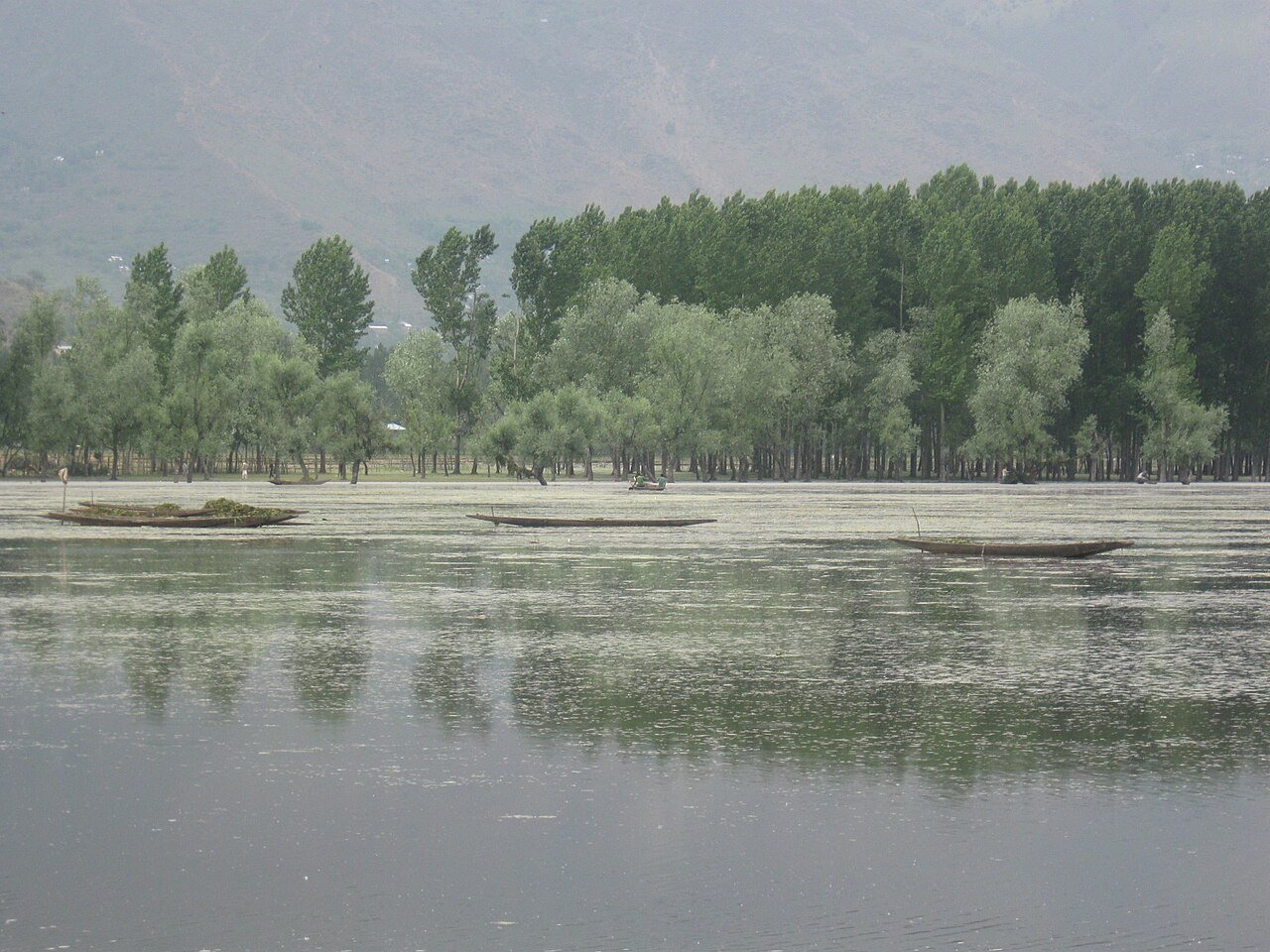
Srinagar – November 23, 2026: Sounding an urgent ecological alarm, environmental scientists, local agriculturalists, and wetland conservationists have warned that unchecked urban effluents, municipal siltation, and weed infestation are severely compromising the bio-vitality of Srinagar’s historic Anchaar Lake.
Once celebrated for its pristine water clarity, thriving biodiversity, and nutrient-rich waters that produced the Kashmir valley’s most sought-after lotus stem (Nadru), large swathes of the wetland are now experiencing severe eutrophication and declining water depth. Local harvesting families, whose livelihoods have depended on indigenous lacustrine farming for generations, report sharp declines in yield and commercial returns due to degraded mud-bed conditions and toxic water stagnation.
Environmental experts point to rapid urbanization along the lake’s catchment periphery and the inflow of untreated domestic waste as primary drivers of ecological decay. Limnologists emphasize that Anchaar Lake plays an irreplaceable hydrological role as a flood-absorption basin for the Jhelum river system, warning that continued shrinkage severely heightens urban inundation risks during seasonal flash runoff.
Civil society organizations and local cultivator cooperatives have appealed to the Lakes and Waterways Development Authority (LCMA) and regional urban bodies to launch a comprehensive ecological revival mission, encompassing mechanical dredging, sewage interception traps, and buffer-zone demarcations to restore the historic lake.
Published by True Roots Media