
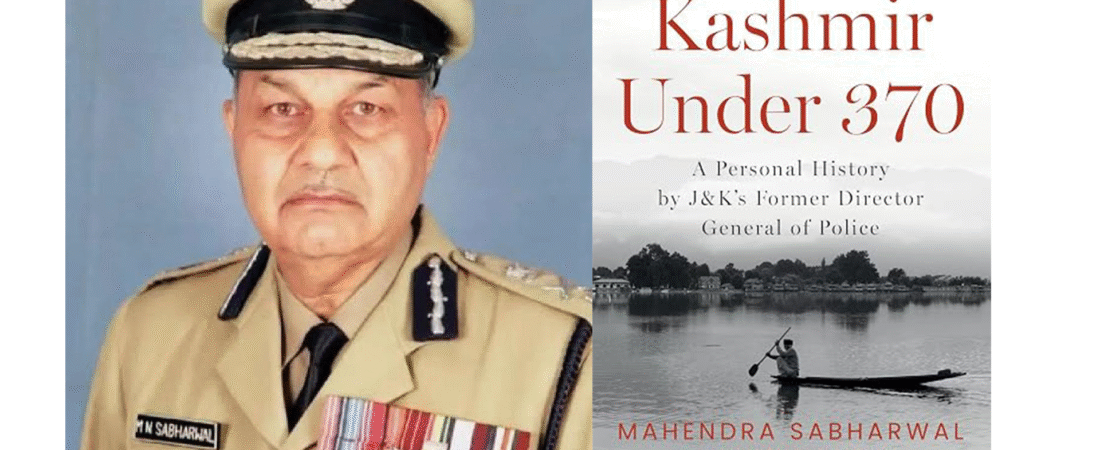
JAMMU, August 11, 2026 – M.N. Sabharwal, the former Director General of Police (DGP) for Jammu and Kashmir, has passed away in Kanpur. A towering figure in the region’s law enforcement history, Sabharwal took the helm of the J&K Police during one of its most turbulent and challenging periods, serving as the seventh DGP of the state from October 1993 to February 1997.
Sabharwal, a 1964-batch Indian Police Service (IPS) officer of the Jammu and Kashmir cadre, is widely credited for strengthening the police response during the peak of militancy. Notably, under his leadership in 1994, he spearheaded the establishment of the Special Task Force (STF), which served as the J&K Police’s first dedicated counter-terrorism wing.
Following his tenure in J&K, Sabharwal went on to hold several prominent national security roles, including serving as the Director General of the Central Reserve Police Force (CRPF) from December 1997 to July 2000. He also served as Special Director of the Intelligence Bureau (IB) and later as Secretary (Security) to the Government of India.
A ‘Boots on the Ground’ Perspective
Beyond his decades in uniform, Sabharwal is widely remembered for his candid and insightful reflections on the state. He co-authored the critically acclaimed book, Kashmir Under 370: A Personal History by J&K’s Former Director General of Police, alongside his son Manish Sabharwal.
The book details Sabharwal’s historic entry as the first IPS officer directly assigned to the Jammu and Kashmir cadre in 1964. However, his story highlights a poignant paradox: despite retiring after serving for nearly four decades and leading the state’s police force, he was not legally permitted to buy land and settle down in the region he called his adopted homeland. Sabharwal was treated as an “outsider” and an “interloper” in the very state he had served.
Sabharwal’s memoir serves as both a historical record and a personal lament for the lives and years lost to conflict. His work offers several key insights:
- An Unsparing Assessment: Readers are introduced to a cast of powerful figures—prime ministers, governors, and local politicians—who controlled Kashmir’s fate. Sabharwal evaluates these key players with unusual moral clarity, detailing the words and thoughts they expressed behind closed doors.
- The Reality of Conflict: The narrative provides a visceral, “boots on the ground” feel of policing in Kashmir, detailing harrowing experiences such as dodging hostile mobs and managing the intense political fallout of major events like the hanging of Zulfikar Ali Bhutto.
- Critique of Cynical Politics: Ultimately, Sabharwal’s work provides an astutely analytical critique of the political maneuvering that hamstrung the region’s peace and prosperity for decades.
The passing of M.N. Sabharwal marks the loss of a key witness to—and participant in—Jammu & Kashmir’s complex modern history. His contributions, both in maintaining law and order and in documenting the region’s struggles, leave a lasting legacy.
Published by True Roots Media Network