
Sometimes, the smallest habits can take us further than we ever imagined.
I come from a small village in Jammu and Kashmir. Like many young people growing up in villages, I did not have a roadmap showing me how to build an international business, travel to the United States, or work with clients across different countries.
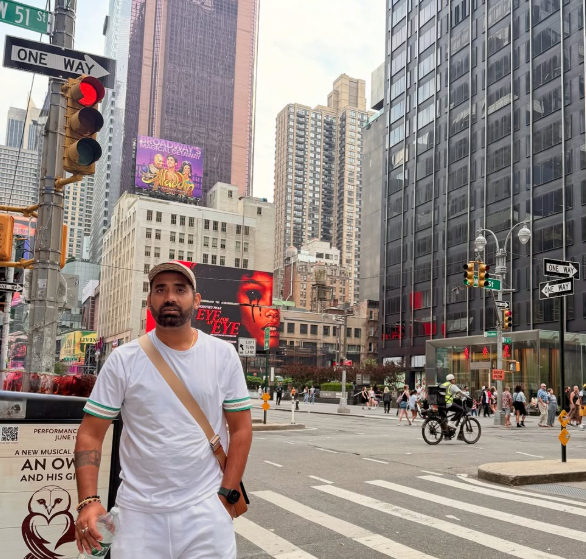
Today, through my entrepreneurial journey, I have had the opportunity to travel to the United States, meet professionals from different industries, and build a business serving clients across the United States and Canada.
When I look back, I realise that growth is not always the result of one big opportunity or one extraordinary decision. Sometimes, it comes from developing small habits that gradually change the way we see the world.
One such habit is learning the names of people and institutions we encounter.
Why should we remember names?
Whenever I attend a conference, a business meeting, or an industry event, I try to pay attention to the people in the room, the organisations they represent, and the work they do.
A person is not just a name. Behind that name is a journey, an experience, a set of skills, and often years of learning.
Similarly, an institution is not just an office or a company. It represents an ecosystem of people, opportunities, knowledge, and ideas.
When you meet someone from a global consulting firm, a university, a government department, or a technology company, do not stop at exchanging visiting cards or connecting on LinkedIn.
Remember their name. Understand their role. Learn what their organisation does.
You may not need that knowledge today, but it could help you understand an industry, solve a problem, or identify an opportunity tomorrow.
How small habits changed the way I see the world
Coming from a village, I have learned that our circumstances do not have to define the limits of our ambitions.
When I started my entrepreneurial journey, I could not have predicted every opportunity that would come my way. Building relationships, learning about new industries, understanding technology, and working with international clients gradually expanded my horizons.
Travelling to the United States gave me another perspective. It allowed me to experience different professional environments, meet people with different backgrounds, and understand how businesses operate across markets.
But travelling alone does not necessarily make a person knowledgeable. What matters is what we observe, what we ask, what we remember, and what we learn from the experience.
The same applies to attending a conference in Jammu, visiting a government office, or meeting a successful entrepreneur in your own neighbourhood.
You do not need to travel thousands of kilometres to expand your thinking. You need to develop the habit of learning from the world around you.
A message to the youth of Jammu Division
I believe our young people have enormous potential. But potential becomes meaningful when it is supported by curiosity, discipline, skills, and consistent effort.
Here are five small habits that can help young people in Jammu Division and across India develop a broader mindset.
1. Learn one new person’s name every day.
Understand what that person does, what they have learned, and what you can learn from their experience. Do not approach every interaction with the expectation of gaining something. Sometimes, listening is enough.
2. Learn about one new institution every week.
It could be a company, a university, a government department, a startup incubator, or an industry association. Understand its purpose and how a young person might engage with it.
You will gradually discover opportunities that you may not have known existed.
3. Ask better questions.
Instead of asking only, “What do you do?”, ask, “What challenges does your industry face?” or “What skills should a young person develop to enter this field?”
Good questions can turn an ordinary conversation into a valuable learning experience.
4. Maintain a learning notebook.
Write down the names of people you meet, institutions you discover, useful ideas you hear, and skills you want to develop.
Review your notes regularly. Over time, you will build your own knowledge base, one small entry at a time.
5. Take one small action on what you learn.
If you discover an interesting industry, research it. If you meet a professional, learn about their field. If you find a promising institution, understand its programmes and opportunities.
Knowledge becomes valuable when it changes what you do.
Jammu’s youth must look beyond geographical boundaries
I started as a small boy from a village in Jammu and Kashmir. My journey has taken me to the United States and into the world of international business. I share this NOT to suggest that my journey is extraordinary, but to remind young people that our beginnings need not determine our boundaries.
The world becomes a little more accessible when we make an effort to understand it.
And sometimes, that effort begins with something as simple as remembering a name.
Ashok Sharma, CEO AccFin Outsourcing