
Editorial | 21 May 2026
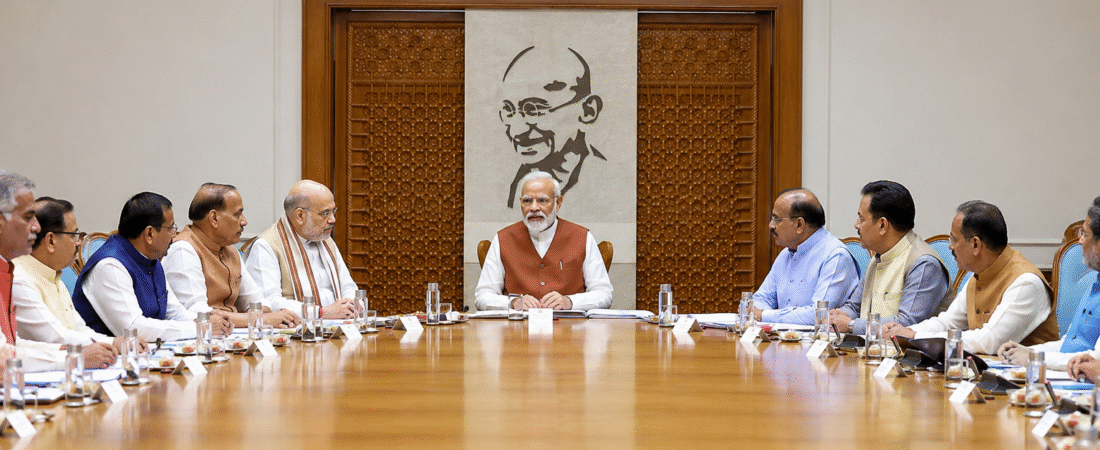
Prime Minister Narendra Modi’s decision to convene a meeting of the Union Council of Ministers marks more than a routine administrative exercise. At a time when domestic governance challenges intersect with global economic uncertainty, the gathering reflects an attempt by the government to review performance, assess policy outcomes and recalibrate priorities for the months ahead.
The meeting, attended by cabinet ministers and ministers of state, is expected to focus on governance efficiency, ministry performance and the progress of reforms initiated during the government’s current term. Discussions are likely to centre on simplifying regulations, reducing procedural hurdles and strengthening delivery systems aimed at improving both ease of living and ease of doing business. Ministries have reportedly prepared reform summaries and impact assessments to support these deliberations.
Such exercises are not uncommon in modern governments. Yet, their value lies not in the symbolism of consultation but in the seriousness of implementation that follows. Administrative reviews often serve as moments of stocktaking—an opportunity to identify gaps between policy announcements and measurable outcomes on the ground. In India’s governance landscape, where ambitious programmes frequently encounter challenges in execution, the emphasis on accountability and inter-ministerial coordination remains particularly significant.
The timing of the meeting adds another layer of political significance. Coming after recent electoral developments and amid continued discussions around a possible cabinet reshuffle, the session has inevitably attracted political interpretation. However, governance must remain the principal lens through which such developments are viewed. Public expectations increasingly demand effective delivery, institutional responsiveness and timely policy execution rather than political spectacle alone.
India’s policy environment today faces multiple pressures—from global economic volatility and geopolitical uncertainty to domestic development priorities. Under such circumstances, reform cannot be reduced to legislative intent alone. It must translate into administrative clarity, regulatory simplicity and tangible benefits experienced by citizens and businesses alike. The effectiveness of any government is ultimately measured not merely by the scale of its announcements but by the credibility of its delivery mechanisms.
The Council of Ministers meeting, therefore, should be viewed as an opportunity for reflection and course correction. Whether it evolves into a meaningful driver of governance reform or remains another high-level review will depend on the policy decisions and administrative action that emerge in its aftermath. For citizens, the expectation is straightforward: governance that is efficient, accountable and responsive to changing realities.