
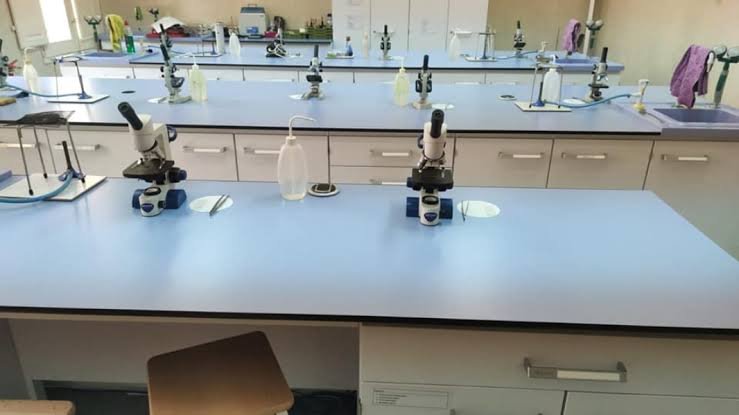
New facilities can open doors for students, but their value will be measured by what children actually learn.
By Ashok Sharma | True Roots Media | 18 November 2026
A welcome development emerged from Jammu’s Children’s Day celebrations. According to reports published on November 15 and 16, the Directorate of School Education, Jammu highlighted 610 completed civil works under Samagra Shiksha, 376 astrophysics laboratories in government high and higher secondary schools, and child-friendly furniture installed in 7,204 schools across Jammu and Kashmir. The civil works were completed in September and October 2026, while the furniture initiative relates to the 2026–27 academic year. These figures cover the Union Territory’s reported initiatives and should not be mistaken for Jammu Division-only totals.
The announcement deserves attention, particularly in a region where distance, terrain and access can shape a child’s educational experience. Yet inaugurating a laboratory and helping a child discover science are two different achievements.
From Buildings to Learning
An astrophysics laboratory could introduce students to the night sky, planetary motion and the habit of asking questions. But equipment alone cannot deliver that promise. Teachers need training, schools need maintenance budgets, and students need regular opportunities to experiment rather than merely watch a demonstration.
Public reporting should eventually tell families which schools received facilities, whether they are operational, how frequently students use them and what support teachers receive. These are practical questions, not a dismissal of the investment.
The same principle applies to furniture and classrooms. A welcoming physical environment matters, but learning also depends on attendance, foundational skills, inclusion and supportive teachers.
Remembering Duggar’s Educational Aspirations
The Dogra period under Maharaja Hari Singh is remembered, among other reforms, for efforts to expand access to education. That historical aspiration offers a useful reminder: education becomes transformative when its benefits reach children beyond privileged households.
In today’s Jammu Division, students in remote hill settlements may face challenges quite different from those in Jammu city. Community awareness initiatives in places such as Dhar Ladda have also reinforced the value of listening to rural families rather than assuming every village has identical needs.
Modern technology should help bridge these distances. A science teacher in a well-equipped school might mentor a neighbouring school’s students; colleges could organise supervised astronomy evenings; and young engineering graduates could volunteer for demonstrations in Dogri, Gojri, Pahari and other familiar languages.
Give Every Child a Reason to Explore
Around the world, successful science education depends on curiosity, experimentation and sustained guidance. Jammu can adapt these principles without treating sophisticated equipment as a substitute for basic teaching.
The next step is to publish school-wise progress, maintain the new facilities and invite feedback from students and teachers. Parents should know not only what was inaugurated but what is being used.
A laboratory is an investment in a building until a child walks in, asks a question and finds the confidence to investigate the answer. That is the outcome Jammu’s educational progress should pursue.