
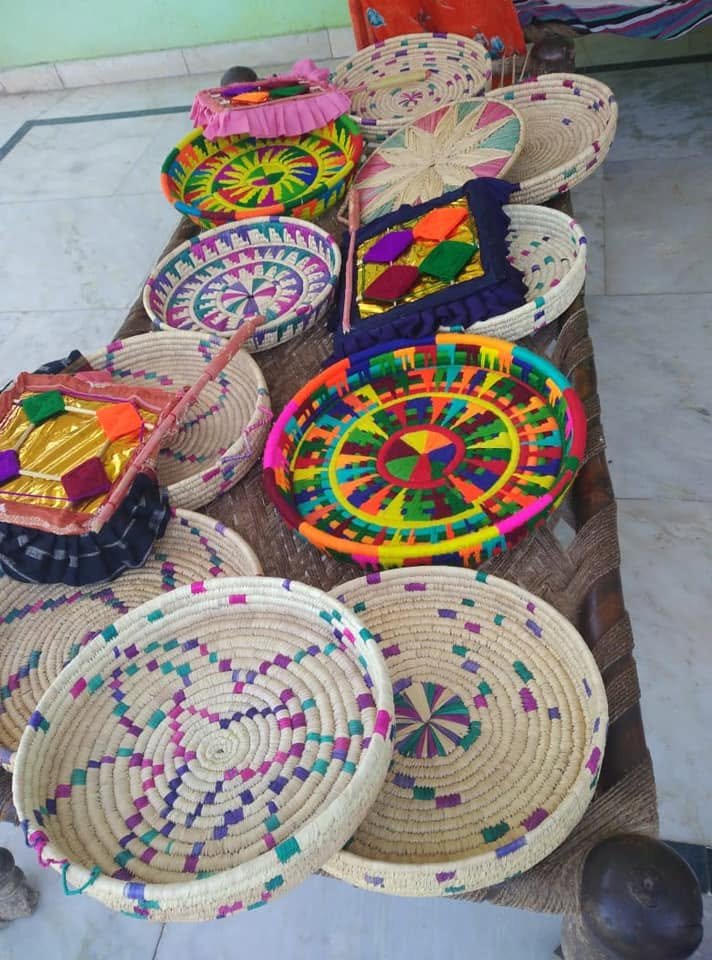
Our artisans preserve generations of skill. Can we build an economy that rewards their knowledge and inspires young people to carry it forward?
By Ashok Sharma | True Roots Media | 12 November 2026
In many homes across Jammu Division, there are objects that carry more history than we realise. A handwoven woollen garment, a beautifully crafted wooden piece, or an old painting may appear ordinary to the family that owns it. Yet behind each lies a story of patience, skill, and knowledge passed from one generation to another.
Our elders often learned these skills not in classrooms but by observing parents, neighbours, and local artisans. Their work served everyday needs while expressing the cultural identity of their communities.
Today, as factory-made products become increasingly accessible, we should ask whether traditional craftsmanship can remain a meaningful source of livelihood.
The Hands That Preserve Duggar’s Identity
Basohli painting is one of Jammu Division’s most recognisable artistic traditions. Its distinctive visual language reminds us that our region has contributed significantly to India’s cultural heritage.
But beyond celebrated art forms, local communities have preserved knowledge of weaving, embroidery, woodwork, and other practical crafts.
These traditions deserve attention not simply because they are old, but because they represent creativity and accumulated experience.
An artisan’s knowledge cannot always be replaced by a machine or reproduced through a short online tutorial. Understanding materials, techniques, and cultural meaning often takes years.
Preserving these skills requires respecting the people who practise them.
From Local Workshops to Global Markets
Across the world, consumers are discovering handmade products through digital marketplaces, independent brands, and cultural tourism.
Jammu’s artisans could benefit from similar opportunities, provided they receive practical support.
A young graduate could help a traditional craftsperson photograph products, create an online catalogue, calculate prices, or communicate with customers. Designers could collaborate with artisans to develop contemporary products without erasing their traditional identity.
However, selling internationally involves challenges such as packaging, shipping, quality consistency, payment processing, and customer expectations.
Training programmes should address these realities rather than promising easy success.
Fair compensation is equally important. Artisans should remain recognised partners in commercial collaborations, not merely anonymous suppliers.
Let Young People Learn From Their Elders
Imagine colleges organising apprenticeship programmes where students spend time with experienced craftspeople.
Students could document traditional techniques, understand the economics of production, and help develop responsible business models.
Local tourism initiatives could include demonstrations and workshops where visitors learn directly from artisans.
Such activities could create supplementary income while encouraging younger generations to appreciate skilled manual work.
Not every traditional craft will become a large business. Nor should commercialisation be the only reason to preserve cultural knowledge.
Some traditions deserve protection simply because they belong to our collective history.
A developed Jammu should be a place where an elderly artisan’s experience and a young entrepreneur’s ideas can work together.
Our heritage should not survive only in photographs, museums, or ceremonial celebrations. Wherever possible, it should remain part of living communities, creating dignity, opportunity, and pride.
The future of Duggar will be stronger when progress gives our traditions new possibilities rather than leaving them behind.