
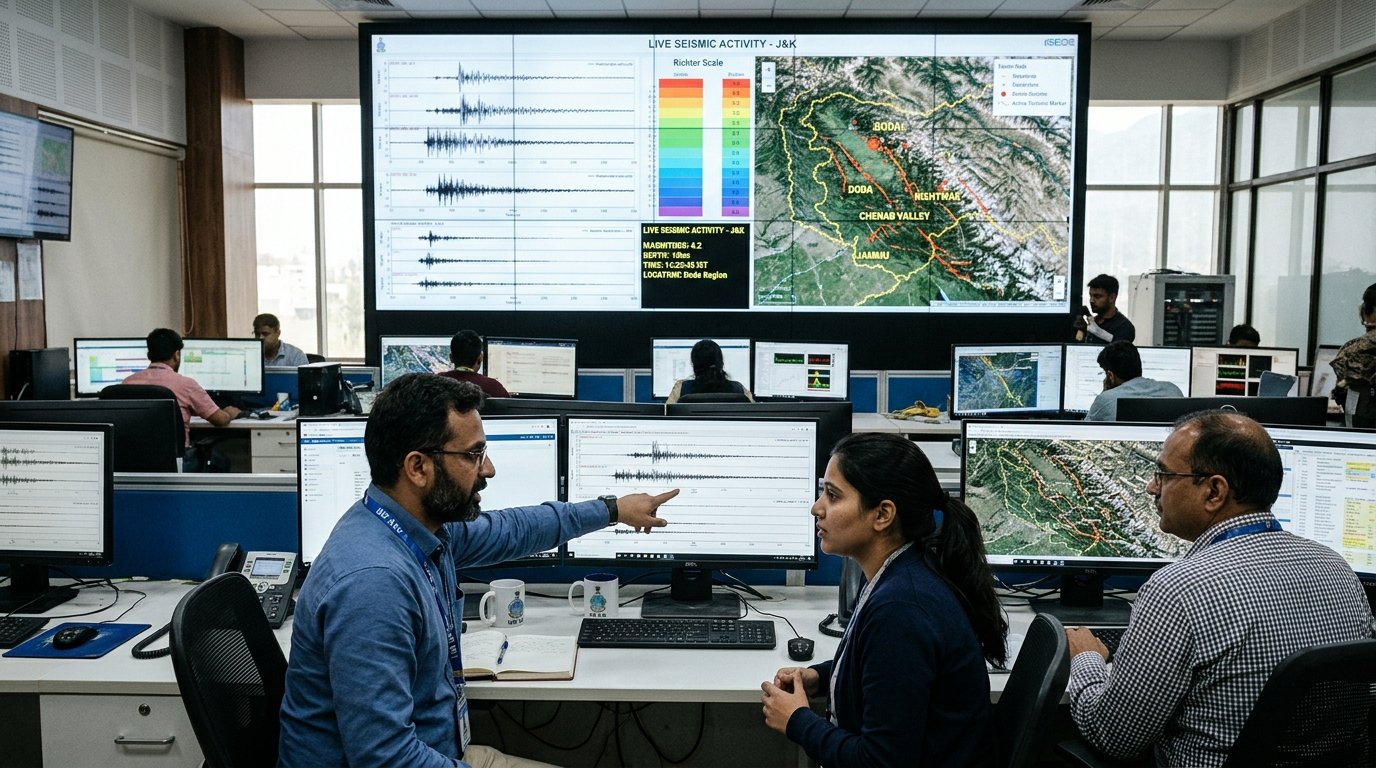
New Delhi – November 23, 2026: Outlining a proactive civil protection doctrine, senior leadership at the National Disaster Management Authority (NDMA) affirmed that India has decisively transitioned from traditional post-event emergency relief toward an intelligence-driven, predictive pre-disaster mitigation framework.
Speaking at a national conclave on climate resilience and geo-hazard preparedness, disaster scientists and administrative commanders detailed how real-time satellite telemetry from ISRO’s Earth observation constellations, coupled with Doppler radar meshes and automated seismic sensors, is transforming risk mitigation across high-vulnerability Himalayan valleys and coastal zones. The predictive framework utilizes machine-learning algorithms to simulate flash-flood trajectories, cloudburst inundations, and slope instability hours in advance, allowing district magistrates to execute targeted pre-emptive evacuations.
Officials highlighted the pan-India expansion of the Common Alerting Protocol (CAP), which transmits localized, multilingual emergency sirens and text broadcasts directly to civilian mobile handsets in threatened geofenced sectors without requiring internet connectivity. This real-time alert architecture was credited with dramatically curbing casualties during recent severe weather disruptions across the northern mountain belts.
The conclave emphasized that allocating dedicated capital toward resilient bridge construction, drainage reinforcement, and community-level disaster volunteers (Aapda Mitras) represents the most cost-effective insurance against climate shocks, safeguarding both human lives and critical economic infrastructure.
Published by True Roots Media