
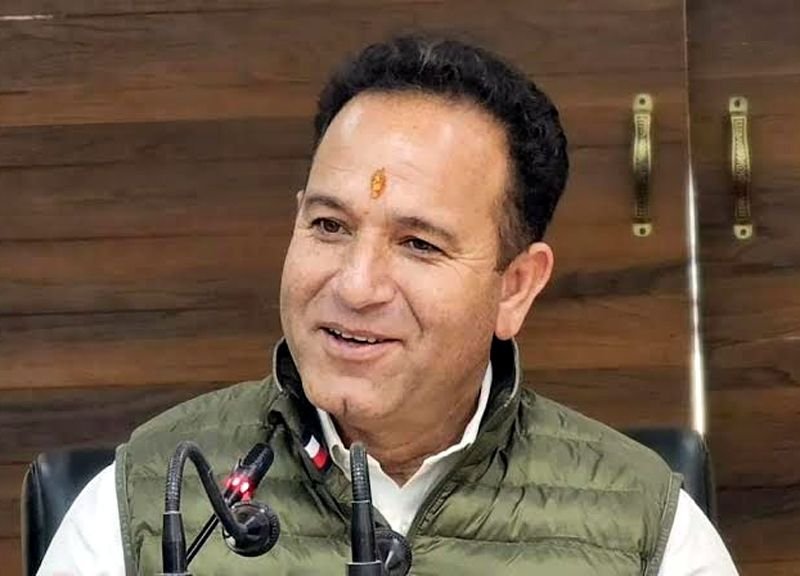
JAMMU: Leader of the Opposition (LoP) in the Jammu and Kashmir Legislative Assembly, Sunil Sharma, has launched a blistering political offensive against the National Conference (NC)-led dispensation, describing its decision to establish informal advisory groups of party legislators as a clumsy stratagem aimed at appeasing internal party dissent rather than strengthening public administration.
Addressing mediapersons, Sharma sharply questioned the constitutional locus standi behind the institutional arrangement, challenging the authority under which party president Dr Farooq Abdullah directed elected Cabinet ministers to interface with party-level oversight panels.
“Dr Farooq Abdullah occupies neither a constitutional post nor any governmental office in the present administration. Under what legal authority is a party president instructing Cabinet ministers of an elected government to report to informal party caucuses?” Sharma asked. “This extraordinary arrangement substantiates concerns that governance is being orchestrated from Gupkar rather than functioning autonomously from the Civil Secretariat.”
The senior BJP leader argued that providing National Conference MLAs with preferential access to departmental heads, policy drafts, and Cabinet ministers subverts democratic parity, directly disenfranchising constituencies represented by Opposition legislators.
“Voters who elected Opposition MLAs possess identical democratic rights and deserve equal representation. Governance cannot be calibrated according to partisan allegiances,” Sharma noted, adding that even the National Conference’s coalition partners were conspicuously omitted from the structure.
Raising critical institutional queries, the Leader of Opposition demanded to know whether these informal committees would be granted official access to classified departmental documentation, possess scrutiny powers over state expenditure, or hold administrative standing to summon civil servants.
“If these bodies possess no statutory powers, they represent nothing more than cosmetic consolation prizes engineered to pacify disgruntled party legislators denied ministerial berths. Conversely, if they attempt to exercise administrative authority, they become unconstitutional, parallel power centers operating outside statutory oversight,” he warned.
Sharma emphasized that the elected Legislative Assembly, through its institutional Departmentally-Related Standing Committees, already provides the legitimate, multi-party constitutional mechanism for legislative scrutiny, policy debate, and ministerial accountability.
Published by True Roots Media