
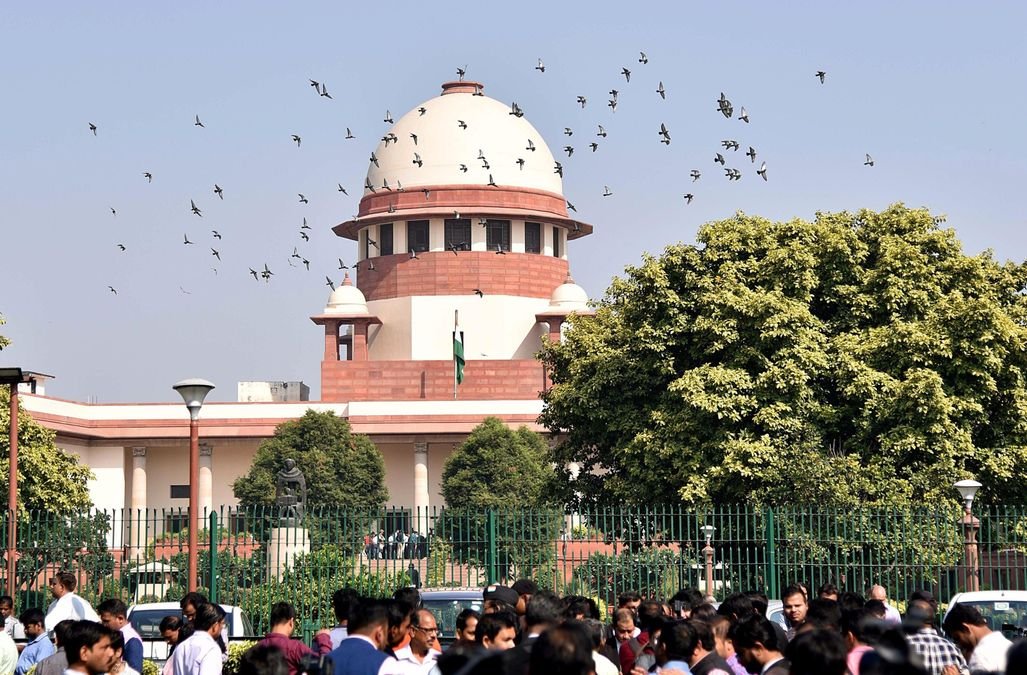
NEW DELHI, October 12, 2026 – Amidst the massive political unrest and the Cockroach Janta Party (CJP) stir in the national capital, the Supreme Court of India intervened decisively on Sunday during a special sitting. The apex court explicitly directed that citizens gathering peacefully must not be illegally detained and ordered the immediate restoration of normal Delhi Metro operations and internet services, subject strictly to established law and order conditions.
A special bench comprising Justices Joymalya Bagchi and V. Mohana issued a formal notice to the Central Government while hearing a contempt plea regarding the alleged violation of earlier court directives, which had prohibited a “complete shutdown” of metro and train services in Delhi.
The judicial intervention comes in the wake of unprecedented security clampdowns across Delhi ahead of a planned mass mobilization at Jantar Mantar. The protests, spearheaded by the CJP and various student organizations, were aimed at demanding the resignation of Chief Election Commissioner Gyanesh Kumar over alleged electoral irregularities. According to reports presented to the court, the police response resulted in the detention of over 7,000 protesters—including prominent CJP leaders, opposition figures, and YouTuber Dhruv Rathee—across approximately 45 temporary detention centers.
During the proceedings, senior advocate Kapil Sibal, appearing for RJD MP Manoj Jha, alleged that law enforcement was actively detaining people from trains and locations far beyond the 4 km radius of Jantar Mantar, where prohibitory orders were officially in place. Senior advocate Shadan Farasat, who was himself detained during the weekend, described the situation as remarkably suppressive, stating, “It’s about citizens’ right to protest. The sense I got yesterday was that we were one step away from a police state.”
The bench firmly directed Solicitor General Tushar Mehta to ensure that lawyers, journalists, and other professionals are not impeded from discharging their duties. The court emphatically stated, “There shall not be illegal detention, save and except by procedure established by law,” and ordered the immediate removal of a notice board citing Section 163 of the BNSS (prohibiting the assembly of five or more persons) that had been placed right outside the Supreme Court premises.
In defense of the administration’s actions, Solicitor General Mehta argued that metro entry and exit were restricted at only 45 out of 303 stations (roughly 15 percent of the network) on October 10. He also submitted that the petitions seeking the release of detainees were largely infructuous, claiming that most detained individuals had already been released.
The Supreme Court is concurrently reviewing multiple petitions linked to the protests, including a habeas corpus petition filed by senior advocate Menaka Guruswamy against the detention of political leaders, and a plea by RJD MP Manoj Jha alleging a disproportionate use of police force.
Published by True Roots Media Network