An oral-history project can connect young people with Dogra heritage while teaching them skills useful far beyond their villages.
By True Roots Media | 15 November 2026
Every family has a story that rarely appears in a history book. It may be about a grandmother walking miles to school, a grandfather remembering an old village fair, or a family moving from the hills to Jammu city in search of work. We hear these stories at weddings, over tea, or during journeys home. Too often, we assume someone will remember them forever.
But memories are fragile. When an elder is no longer around, their particular voice, humour and account of everyday life can disappear with them. Preserving these memories is not nostalgia for its own sake. It can help young people understand how their communities changed and how earlier generations faced uncertainty.
Duggar’s History Lives Beyond Monuments
Jammu’s Dogra heritage is visible in places such as the historic Mubarak Mandi complex, but it also survives in the spoken experiences of ordinary families. An elder may remember how Dogri was spoken in a local market, how neighbours prepared for a festival, or how a village adapted when a new road arrived.
Such recollections are valuable, though they are not automatically complete historical records. Memory can be selective, and different people may remember the same event differently. A responsible oral-history project should preserve those differences, record dates and places where possible, and compare important claims with documents or other accounts.
The aim is not to turn every family story into an unquestioned fact. It is to understand the people behind the facts.
Give Young People the Tools to Listen
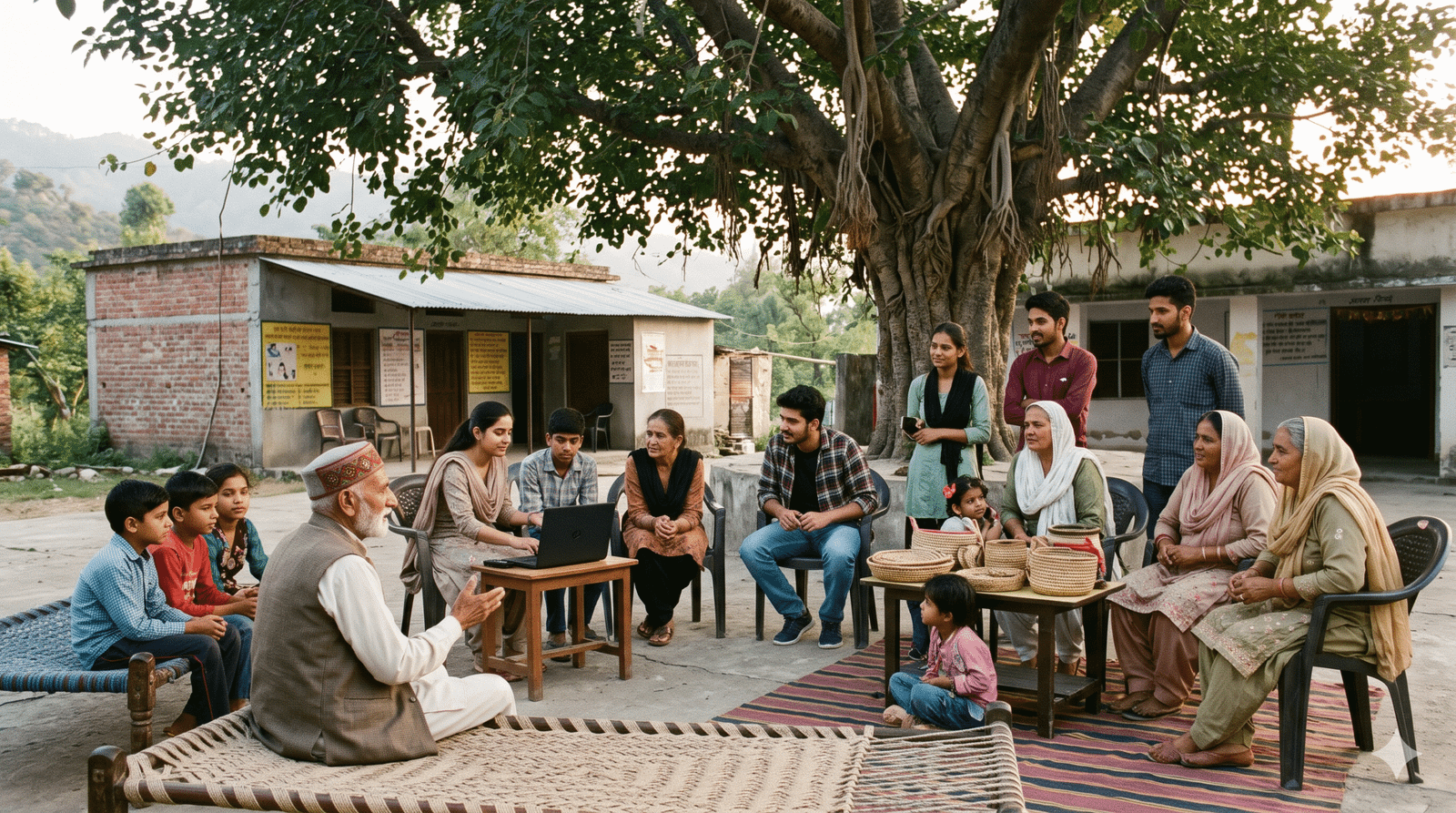
Imagine a school or college inviting students to interview an elder in their own village. A smartphone, a quiet room and a few thoughtful questions could be enough to begin. What was your first job? How did people travel? Which Dogri songs did you hear as a child? What changed most in your lifetime?
Students could learn interviewing, audio editing, translation, archiving and fact-checking. They might prepare bilingual transcripts so that someone unfamiliar with Dogri can still appreciate the story. Local libraries or cultural institutions could help preserve selected recordings with the interviewees’ informed permission.
Privacy matters. Not every memory is meant for public circulation, and elders should be free to decline questions or restrict access to recordings.
A Local Story Can Speak to the World
Communities across the world use oral history to explore migration, livelihoods, language and social change. Jammu’s young researchers could learn from these methods while documenting the particular experiences of Duggar and the wider, diverse Jammu Division.
A conversation about an old village path may reveal how access to education changed. A story about traditional work may inspire a student to study crafts or entrepreneurship. A recollection of cooperation during difficult times may offer lessons in community resilience.
We need not wait for a grand institution or a large budget to begin. We can start by listening carefully to one person.
The future of Jammu should be built with modern ideas, but also with an understanding of the lives that brought us here. Our grandparents have stories worth hearing. Our young people can help ensure those stories remain available to the generations still to come.