
DUBAI, July 14, 2026 — Tensions in the Middle East have reached a boiling point after the United States launched a series of military strikes against Iranian targets early Tuesday morning. The military action followed an announcement by US President Donald Trump that Washington is “reinstating” a blockade on Iran in the Strait of Hormuz and plans to charge international ships for safe passage.
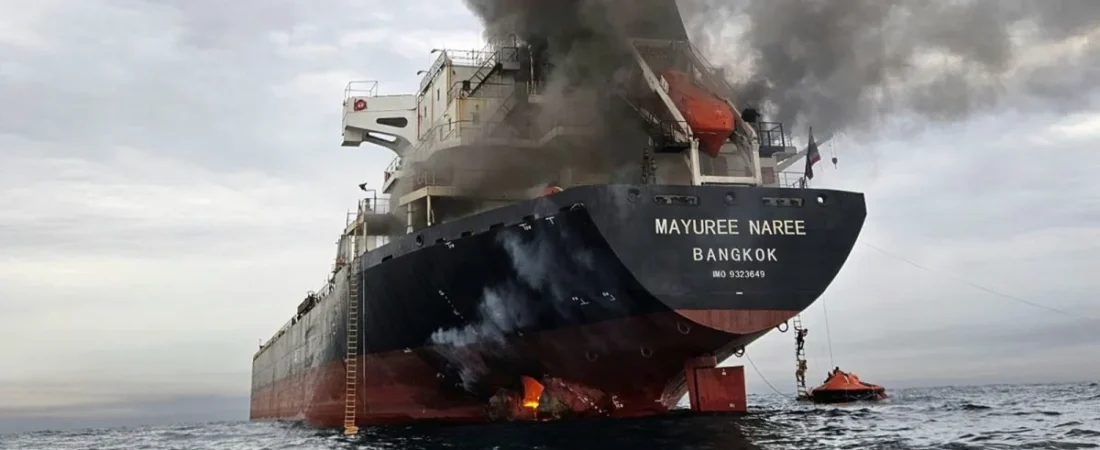
In immediate retaliation, Iran targeted Bahrain and launched cruise missiles at two tankers associated with the United Arab Emirates in the Strait of Hormuz, killing one mariner and wounding eight others.
The escalating conflict is threatening to plunge the region back into widespread hostilities, drawing the UAE into potential direct confrontation with Tehran and causing a surge in global oil prices.
US Strikes and Policy Shift on Global Navigation
The U.S. military’s Central Command confirmed it conducted strikes targeting Iranian “coastal defense systems, missile and drone sites, and maritime capabilities” across several areas, including Abu Musa, Bandar Abbas, Bushehr, Chahbahar, Jask, and Konarak. Iran acknowledged the strikes but has not immediately released damage or casualty assessments.
Speaking from the Oval Office, President Trump described the military action as a “major attack” designed to neutralize Iran’s offensive capabilities.
“We’re knocking out all of their offensive capability and we’re controlling the straits. We’re putting the blockade back,” Trump told reporters. Furthermore, the President announced an unprecedented shift in U.S. policy, stating that the military will begin charging a toll—reportedly 20% of cargo value—for commercial ships transiting the strait.
“We’re protecting a very rich portion of the world. We’re spending money. And so, what we’ve done is, we are going to be reimbursed for protection,” Trump added.
This move upends centuries of American policy regarding the freedom of navigation and is expected to raise tensions with international partners, as the Strait of Hormuz is a critical artery through which a fifth of all global crude oil and natural gas historically passes.
Iran Retaliates: Attack on Tankers and Bahrain
In response to the US strikes, Iran’s paramilitary Revolutionary Guard targeted two UAE-linked tankers, identified as the Mombasa and the Al Bahiyah. The Emirati Defense Ministry reported that two cruise missiles set the vessels ablaze. The fires have since been extinguished, but the attack resulted in the death of one Indian national, while six other Indians and two Ukrainians were wounded.
The Revolutionary Guard claimed responsibility, stating the vessels “ignored repeated warnings” and “chose to pass through a minefield.”
Additionally, Bahrain came under renewed attack early Tuesday as part of Iran’s retaliatory sweep. Missile alert sirens were activated twice in the country, urging the public to seek shelter, though no casualties or significant damage have been reported there yet.
Regional Fallout and Economic Impact
The United Arab Emirates has issued a strong warning in response to the tanker attacks. “The UAE reserves its full right to respond to this escalation and to take all necessary measures to protect its territory, its citizens, and residents,” the Defense Ministry declared. Fighter jets were heard flying over Dubai on Tuesday morning.
Due to the deteriorating security environment, the U.S. Embassy in Abu Dhabi and the U.S. Consulate in Dubai have canceled all consular appointments through Wednesday.
The geopolitical shockwaves are already impacting global markets. The price of benchmark Brent crude oil surged to a one-month high of over $84 in early Tuesday trading.
The U.S. military stated that its reinstated blockade of Iranian ports will officially resume at midnight local time on Wednesday, setting the stage for a highly volatile standoff in one of the world’s most vital maritime chokepoints.
Published by True Roots Media Network