
Why our education system must give practical skills the same respect as academic achievements.
By Ashok Sharma | True Roots Media | 22 October 2026
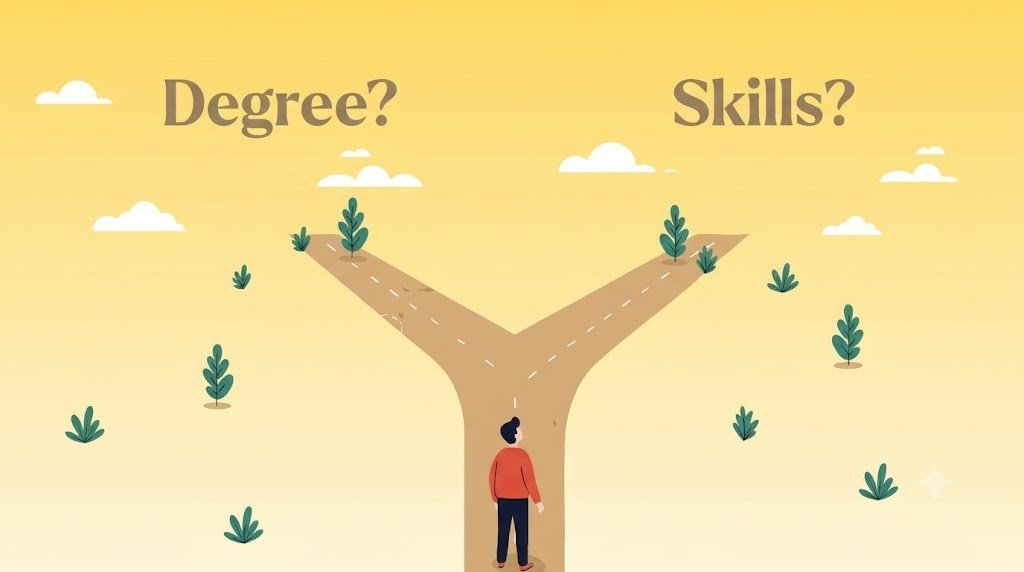
There is a familiar conversation in many homes across Jammu. A child is encouraged to study hard, earn good marks, and find a respectable job. These are reasonable hopes. Education can open doors that earlier generations never had. But somewhere along the way, we have begun treating practical skills as a second choice, something to consider only when an academic path does not work out.
I wonder what would change if every student spent a little time learning from someone who works with their hands. A farmer who understands the soil, a carpenter who measures twice before cutting, a tailor who has built a livelihood through patience, or a technician who repairs what others would throw away. Their knowledge may not always come with a university degree, but it deserves respect.
What Our Communities Already Know
In Duggar, generations of families have passed on skills through observation and practice. Traditional weaving, food preparation, farming, and craftsmanship involve judgment that cannot be learned from a textbook alone. The handloom sector in Samba, for example, remains part of Jammu and Kashmir’s wider tradition of skilled work.
Yet children rarely get to see these skills as sources of innovation. A student who learns how a local business buys materials, prices its products, and serves customers is also learning mathematics, communication, and entrepreneurship. A young person who documents a craft can develop photography, research, and digital marketing skills while respecting the craftsperson behind it.
Learning Beyond the Classroom
India’s National Education Policy 2020 envisages vocational exposure and internships from the middle-school years. More recently, on 6 January 2026, Jammu and Kashmir officials outlined a five-year skilling roadmap linking schools, colleges, technical institutions, and working adults. These are promising directions, but their value will depend on what students actually experience, not merely what appears in policy documents.
Imagine schools organising a day with local professionals, followed by a small student project: explain the skill, identify one problem, and propose a practical improvement. Colleges could partner with neighbourhood businesses for short internships, while employers could give young people meaningful tasks instead of certificates for attendance.
Respect the Skill, Expand the Opportunity
Practical learning should never become an excuse to deny anyone higher education. A student may wish to become a doctor, engineer, researcher, artist, or entrepreneur. All deserve encouragement. The point is to connect knowledge with the confidence to use it.
In a world shaped by automation and artificial intelligence, the ability to solve real problems, work with others, and keep learning will matter. Our youth should be able to pursue opportunities across India and the world without feeling that the wisdom of their own communities has no value.
Perhaps the next useful lesson is waiting just beyond the classroom door.
How to Share Your Feedback
If you have thoughts that could aid us in enhancing our content quality or any concerns regarding the information presented, please do not hesitate to get in touch.
You can reach us at info@truerootsmedia.com or call us at 91 96544 66895. We genuinely value your input and believe it plays a crucial role in our ongoing commitment to delivering the best reader experience.