
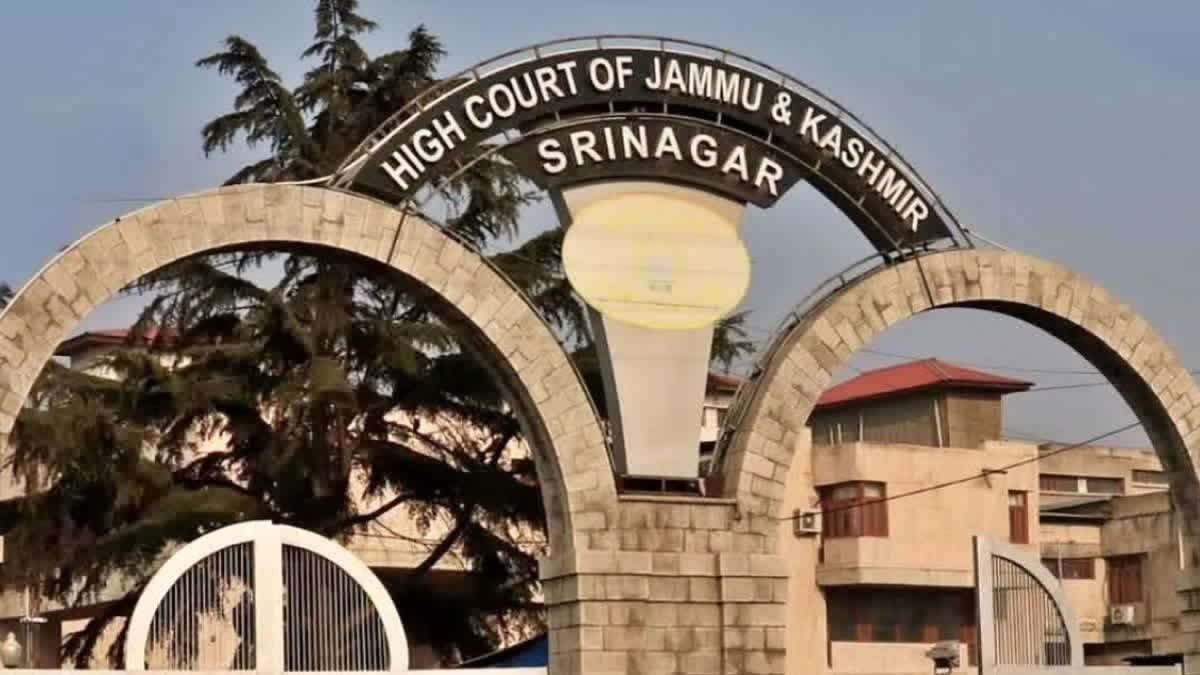
JAMMU, October 23, 2026 – In a significant judgment impacting Gram Rozgar Sevaks (GRS) and supporting staff engaged under the Mahatma Gandhi National Rural Employment Guarantee Act (MGNREGA), the High Court of Jammu & Kashmir and Ladakh has ruled that appointments made through backdoor methods or without a transparent selection process cannot be protected solely on the ground of prolonged service.
However, balancing the scales of justice, the court categorically clarified that employees whose appointments are disputed cannot be arbitrarily disengaged through a blanket government order without a thorough examination of the legality of their individual engagements.
Justice Sanjay Dhar delivered the judgment while deciding a massive batch of 75 connected matters, which included 62 writ petitions and 13 contempt petitions. The court upheld Government Order No. 203 RD&PR of 2018 (dated August 9, 2018), which directed the discontinuation of engagements made in violation of prescribed rules, norms, and procedures. The court also upheld a government communication from April 23, 2013, concerning an inquiry into allegedly illegal engagements and the subsequent stoppage of salaries.
During the proceedings, the petitioners, many of whom have worked under MGNREGA for several years and have now become overage, argued that engagements made before the issuance of specific selection guidelines on December 14, 2010, could not be automatically declared illegal. Several petitioners also contended that their appointments shouldn’t be deemed “backdoor engagements” just because they carried recommendations from Ministers, MLAs, or other government functionaries, especially since they claimed to have participated in an advertised selection process.
Rejecting the argument that the absence of formal guidelines prior to 2010 allowed for arbitrary appointments, the High Court observed that even temporary or contractual appointments must rigorously satisfy the constitutional requirements of fairness, transparency, and equal opportunity under Articles 14 and 16. Relying on Supreme Court judgments, the court emphasized that public employment cannot be distributed via a pick-and-choose policy.
At the same time, Justice Dhar observed that the mere mention of recommendations by politicians in engagement orders does not automatically render an appointment illegal if the employee was otherwise selected through a fair and transparent procedure. The court noted that the government had failed to conduct an inquiry to determine the actual nature of the petitioners’ engagements.
Consequently, the High Court ordered authorities to conduct an in-house, case-by-case inquiry. Employees must be allowed to submit representations and supporting documents, or alternatively, be issued individual show-cause notices before a final decision on their termination is made. The court directed that petitioners whose appointments are found to be fair and in accordance with norms must be allowed to continue, and their pending salaries must be released.
For appointments proven to be illegal, authorities are free to disengage the employees without wages; however, the court directed that wages already paid under its earlier orders should not be recovered.
Published by True Roots Media Network