Our mother tongue should not become a language we only remember on cultural occasions.
By Ashok Sharma | True Roots Media | 19 October 2026
A language does not disappear from our lives overnight. Sometimes, it slowly becomes a language we understand but hesitate to speak.
I often notice how naturally we switch to Hindi or English in conversations, even when everyone around us understands Dogri.
There is nothing wrong with learning other languages. English connects us with global opportunities, Hindi connects us with millions of people, and other languages introduce us to different cultures.
But why should this progress come at the cost of our mother tongue?
A Lesson from Dogra History
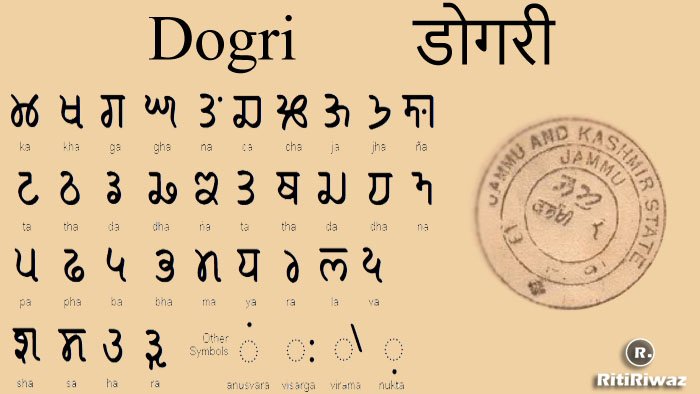
In 1944, a group of dedicated Dogri writers and intellectuals established Dogri Sanstha, an institution that would play an important role in promoting our language and literature.
Among them was Prof. Ram Nath Shastri, who devoted much of his life to strengthening Dogri as a literary language. He even translated works of international literature into Dogri, demonstrating that our mother tongue could express ideas from across the world.
Decades later, Dogri was included in the Eighth Schedule of the Indian Constitution through the 92nd Constitutional Amendment Act, 2003, which came into force on 7 January 2004.
These achievements remind us that cultural recognition requires commitment across generations.
But recognition on paper is only part of the journey.
What About the Next Generation?
Imagine a child growing up in Jammu who understands Dogri spoken by grandparents but rarely responds in the same language.
Over time, that child may become comfortable with the language but unable to express deeper thoughts, emotions, or stories in it.
And with every generation, something valuable could be lost.
Our Dogri folk songs, wedding traditions, humour, proverbs, and everyday expressions carry experiences that cannot always be translated with the same feeling.
Language is more than communication. It is also a connection with our families and collective memory.
Dogri in a Digital World
Today, young people can create podcasts, short films, educational videos, digital archives, and online communities.
Why not use these opportunities for Dogri?
Imagine a young developer building a Dogri learning application, a filmmaker documenting traditional rituals, or a student recording conversations with grandparents about village life.
These are not merely cultural activities. They can develop skills in research, storytelling, technology, and communication.
We should not expect every young person to become a writer or cultural activist. But each of us can contribute in a small way.
Speak Dogri at home. Teach children a few new words. Record an old folk story. Read a Dogri poem. Support artists who create in our language.
And remember, protecting Dogri does not mean distancing ourselves from other languages or communities.
Our roots can remain strong while our minds remain open to the world.
The future of Dogri will not be decided only in universities, cultural institutions, or government offices. It will also be decided in our homes, in everyday conversations, and by the choices we make for our children.
Let us give the next generation every opportunity to learn the languages of the world, without allowing them to lose the language of home.