
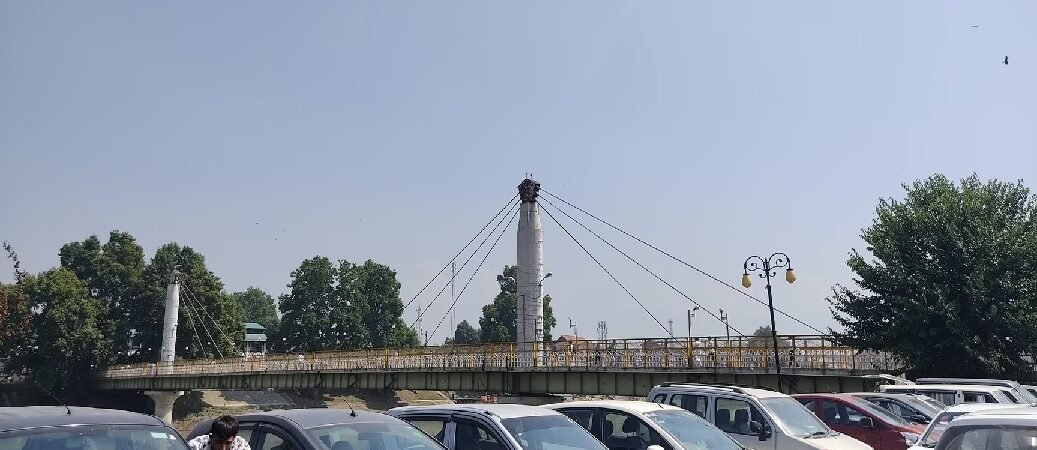
JAMMU, September 14, 2026 – Jammu and Kashmir’s ambitious Parking Policy 2026, introduced with an elaborate framework to regulate urban parking and ease mounting traffic congestion, appears to be stuck entirely at the implementation stage. Notified by the Housing and Urban Development Department on January 22, 2026, the policy aimed to transform the chaotic existing system into a structured mechanism, promoting walkability and public transport while reducing dependence on private vehicles. However, several months after its notification, the policy’s primary objectives remain unfulfilled on the ground. The policy document itself highlighted critical challenges such as the acute non-availability of parking spaces in core areas, high demand in mixed commercial zones, inadequate IT systems, and a severe lack of on-ground enforcement, yet motorists and pedestrians continue to face the same disorganized conditions.
A central feature of the policy was the division of city parking into three distinct zones to apply varied regulations, pricing, and provisions. PZone 1 was designated for intensive commercial areas with high footfalls, PZone 2 for moderate mixed-use or predominantly residential spaces, and PZone 3 for sparsely developed city peripheries. Despite this clear categorization, these parking zones have yet to be identified and formally notified by most Urban Local Bodies (ULBs). Sources indicate that without the formal identification of these zones, the proposed area-wise parking regime cannot be operationalized, leaving the innovative pricing and management strategies completely stagnant.
The failure to implement the policy is further compounded by the absence of Parking Management Area Plans (PMAPs) and dedicated institutional frameworks. PMAPs, which are supposed to detail on-street and off-street parking, multi-level facilities, vending zones, and pedestrian circulation at the area level, have not been drafted by local authorities. Consequently, no concrete decisions can be made regarding where parking should be provided or how surrounding traffic should be managed. Furthermore, the prescribed Parking Committees at the Municipal Corporation and ULB levels have not been constituted, halting the approval of PMAP boundaries and the monitoring of parking service providers. As a result, critical mandates requiring adherence to the Bureau of Indian Standards and the National Building Code for barrier-free environments remain confined strictly to paper, leaving the technology-driven parking regime far from reality.
Published by True Roots Media Network