
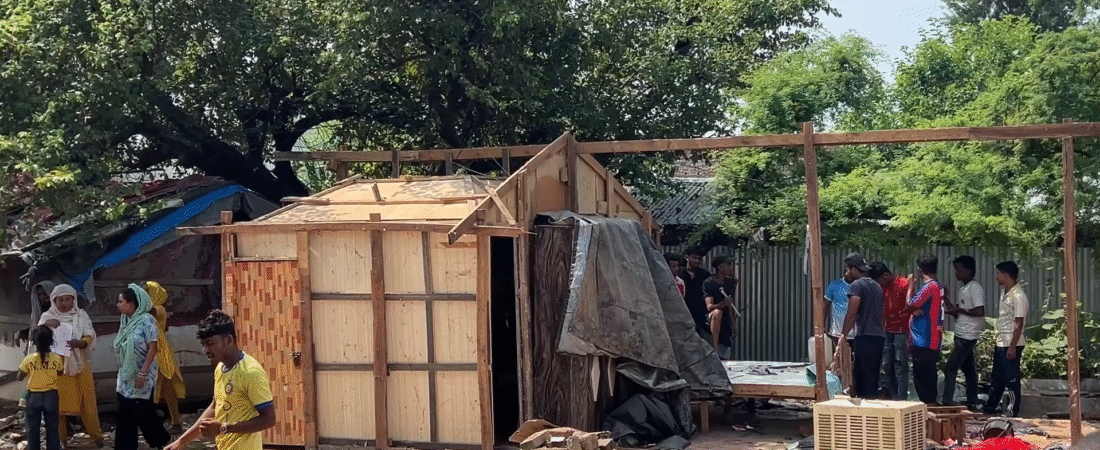
JAMMU, September 17, 2026 – Rohingya families have begun dismantling their shanties at Burma Market in the Kiryani Talab area of Jammu after the civil administration initiated a major crackdown on illegal settlements. The authorities served eviction notices to local landowners, directing them to immediately remove the unauthorized residential and commercial structures from their plots. The notices were formally issued by the Jammu District Collector under Section 133-A of the Jammu and Kashmir Land Revenue Act, 1996, which expressly prohibits the unauthorized conversion and sub-letting of designated agricultural land for residential purposes.
This administrative action comes just over a month after a Centre-appointed high-level committee on demographic changes visited Jammu to assess issues related to illegal immigration in the Union Territory. The Burma Market settlement, which includes a local madrassa, has served as a primary base for Rohingya refugees in the region for over two decades. Following the stringent ultimatum to the property owners, distress has spread among the estimated 1,500 to 2,000 refugees residing in the settlement. Visuals from the area showed families pulling down their temporary huts, gathering their belongings, and expressing profound uncertainty over their immediate future and relocation prospects.
Residents of the settlement have voiced their deep anxiety over the sudden displacement, stating they are unable to return to Myanmar due to the ongoing threat of persecution. Many refugees, pointing out that they hold UNHCR refugee cards, have pleaded for an extension of five to six months to find alternative relocation sites, arguing that they cannot pack up and move instantly. However, the eviction drive aligns with a broader, intensified push by the government against illegal immigration across Jammu and Kashmir. Official data presented to the demographic committee recently indicates that over 7,600 Rohingyas have been identified across the Union Territory, prompting authorities to continuously monitor the security and demographic implications of these border-region settlements.
Published by True Roots Media Network