
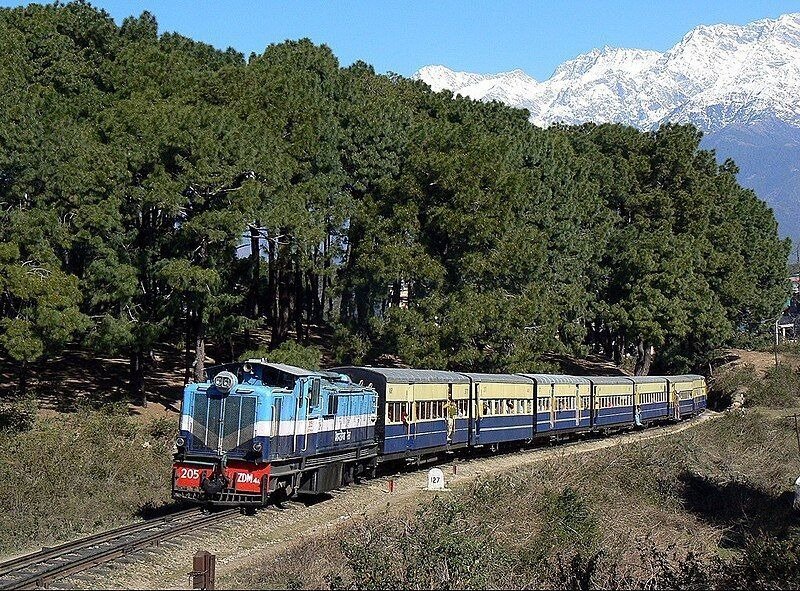
JAMMU, November 3, 2026 – The ambitious Bilaspur-Manali-Leh railway line—a mega-project of immense strategic importance designed to connect the remote Union Territory of Ladakh with the rest of the country’s rail network—is set to witness accelerated progress in the coming months.
However, as the project moves forward, scientific experts are urging caution regarding the formidable Himalayan terrain. A recent study has strongly advocated for comprehensive geotechnical cryospheric investigations to ensure the long-term stability and safety of the route.
The landmark project, whose Detailed Project Report (DPR) estimates a staggering cost of ₹1.31 lakh crore, is recognized as one of the highest and most complex railway endeavors in the world. The study points out that while the rail link will act as a massive catalyst for regional connectivity and socio-economic development, its infrastructure could be severely threatened by cryosphere-related hazards (such as permafrost thawing and glacial shifts) and climate-induced landscape changes.
Given the ecologically sensitive and geologically fragile nature of the high-altitude Himalayas, researchers stress that advanced geotechnical and environmental assessments are mandatory to mitigate risks associated with extreme weather events, flash floods, and landslides. Addressing these cryospheric challenges early in the execution phase is considered crucial to preventing structural vulnerabilities.
Despite the geological hurdles, the Ministry of Railways and the Ministry of Defence are keen on fast-tracking the project given its paramount strategic significance along India’s northern borders. Once completed, the 489-km-long rail line—which will feature over 270 kilometers of tunnels and stations at altitudes exceeding 5,000 meters—will provide seamless, all-weather connectivity to Leh. This will drastically reduce travel time and logistical constraints for both the armed forces and the local civilian population.
While the ₹1.31 lakh crore budget has been approved, authorities indicate that the overall cost may exceed the initial estimates due to the necessity of deploying advanced hazard mitigation technologies and the unprecedented complexities of high-altitude construction.
Published by True Roots Media Network