
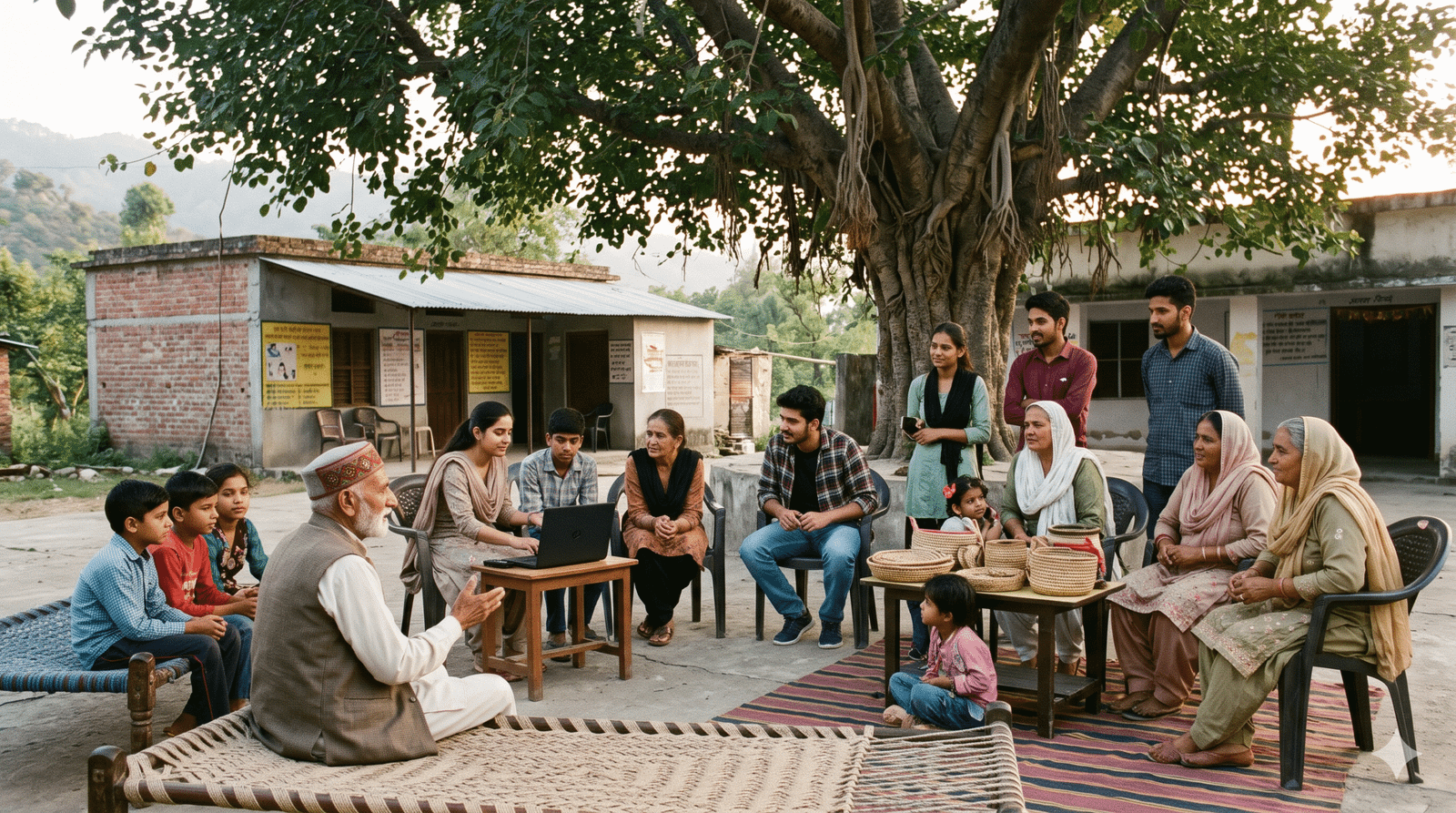
Development is not only about roads and buildings. It is also about creating places where people can learn from one another.
By Ashok Sharma | True Roots Media | 13 November 2026
A village is remembered not only for its houses and fields, but also for the places where people meet. It may be a courtyard, a shaded tree, a community ground, or the steps outside a small local institution. These are the places where elders exchange news, children play, and neighbours notice when someone needs help.
As towns expand and everyday life moves onto mobile screens, such spaces can easily lose their importance. Yet the need for human connection has not disappeared. If anything, young people navigating education, employment, and social pressure may benefit from it more than ever.
What Our Traditions Teach Us
Across the Dogra heartland, community gatherings have long accompanied festivals, family occasions, and local cultural performances. The traditional Kud dance, associated with parts of Jammu’s hill communities, offers a meaningful example of how music and shared celebration can bring people together.
These traditions remind us that culture was not always something watched from a distance. People participated in it, learned from older generations, and developed a sense of belonging.
But preserving community life does not mean romanticising the past. Older social spaces were not equally welcoming to everyone. A modern gathering place should consciously include women, children, people with disabilities, and residents from different backgrounds.
A Community Space Can Become a Learning Space
Imagine a modest village centre opening its doors after school hours. One evening, a retired teacher helps students with reading. Another day, a local craftsperson demonstrates a traditional skill. A young professional explains how to prepare a résumé, apply for an internship, or use basic digital services safely.
Such programmes need not begin with expensive buildings. Existing school halls, libraries, panchayat facilities, and other suitable public spaces might be shared where permissions, staffing, and safety arrangements allow.
Young volunteers could help organise sessions, while elders contribute experience that rarely appears in textbooks. A small reading corner, reliable internet access, and a regular calendar could make these spaces useful throughout the year.
Similar community-learning ideas have relevance far beyond Jammu. Around the world, libraries and neighbourhood centres help people build skills and relationships outside formal classrooms. We can learn from those models while shaping something suited to our villages.
Build Connections Alongside Infrastructure
A new road may shorten a journey. A functioning community space can make the destination more meaningful.
Local authorities, schools, residents, and civil society groups could begin by identifying one accessible place in each interested community and asking young people what activities they would actually attend. Clear rules, transparent management, and regular feedback would matter more than an elaborate inauguration.
Jammu’s future needs modern infrastructure, but it also needs trust between generations. Our Dogra heritage gives us traditions worth sharing; our young people bring ideas worth hearing.
The strongest communities will be those that make room for both.