
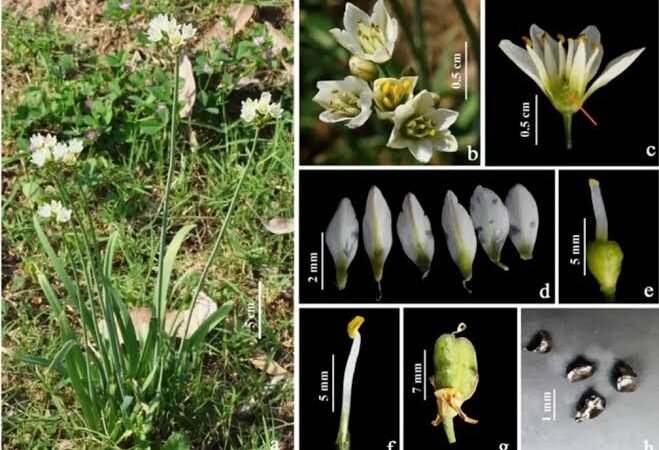
SRINAGAR, September 15, 2026 – In a concerning ecological development, a highly invasive alien weed known commonly as ‘False Garlic’ (Nothoscordum gracile) has been formally recorded in the Union Territory of Jammu and Kashmir for the very first time. The discovery has prompted immediate warnings from local botanists and agricultural researchers, who are expressing serious concerns about the plant’s potential to spread rapidly across the region and disrupt native ecosystems. The invasive weed, which closely resembles cultivated garlic and onion in its appearance, was recently identified growing prolifically in local fields, marking a significant new threat to the region’s agricultural landscape and native biodiversity.
The primary concern among researchers is the plant’s aggressive reproductive strategy, which makes it exceptionally difficult to eradicate once it has established a foothold. ‘False Garlic’ reproduces prolifically through numerous small, underground bulblets, allowing it to quickly colonize new areas and aggressively outcompete indigenous flora for soil nutrients and space. Because the weed is visually similar to cultivated regional crops, it can easily go unnoticed in agricultural fields until it has already caused substantial ecological and economic damage.
Following this initial formal observation, researchers are urgently calling for a fresh, comprehensive assessment of the weed’s current spread within Jammu and Kashmir. They emphasize the critical need for early intervention strategies to contain the plant before its bulblets are unintentionally dispersed further into adjacent agricultural and wild areas. Agricultural authorities and local stakeholders are being urged to formulate targeted management guidelines to educate farmers on how to correctly identify and safely remove the invasive species without inadvertently accelerating its spread across the region.
Published by True Roots Media Network