
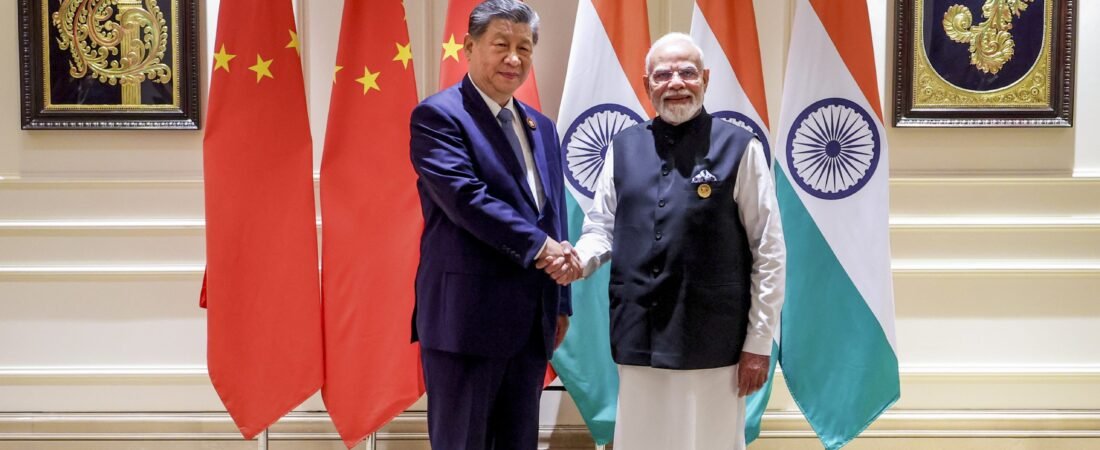
BEIJING, September 15, 2026 – Chinese Foreign Minister Wang Yi announced that President Xi Jinping and Prime Minister Narendra Modi reached a “most important consensus” during their recent meeting, affirming that India and China should function as partners rather than rivals. Summing up President Xi’s crucial two-day visit to New Delhi for the 18th BRICS Summit on September 12 and 13, Wang detailed that the two leaders engaged in a candid, in-depth exchange of views regarding the strategic and long-term trajectory of bilateral relations. According to Wang, President Xi emphasized that the two neighboring nations can draw on each other’s unique strengths, support one another’s success, and actively pursue common development instead of viewing each other as adversaries.
The extensive discussions between the two leaders yielded several key commitments aimed at stabilizing and elevating ties. A primary focus was the shared agreement to jointly maintain peace and tranquility in the border areas, with both sides pledging to properly manage differences and contradictions to uphold regional stability. Wang highlighted PM Modi’s positive response during the talks, noting that the Indian Prime Minister reaffirmed India’s readiness to be a partner to China and stated that New Delhi views China’s development as an opportunity rather than a threat. Furthermore, Wang quoted PM Modi as asserting that India’s approach to its relationship with Beijing remains completely independent of third-party influence and that Indian territory will not be allowed to host anti-China activities.
Looking ahead, both nations agreed to prioritize development as the fundamental bedrock of their shared interests. To achieve this, they plan to expand cooperation across multiple sectors, including deepening cultural and people-to-people exchanges and re-establishing direct air connectivity to foster greater mutual understanding. On the multilateral front, the leaders committed to supporting each other’s respective BRICS chairmanships—with China set to take the helm in 2027—while strengthening coordination within global frameworks such as the United Nations, the Shanghai Cooperation Organisation (SCO), and the G20. Wang concluded by emphasizing that the steady normalization of India-China relations holds profound significance not just for the 2.8 billion people of both nations, but as a stabilizing pillar for the entire Global South.
Published by True Roots Media Network